
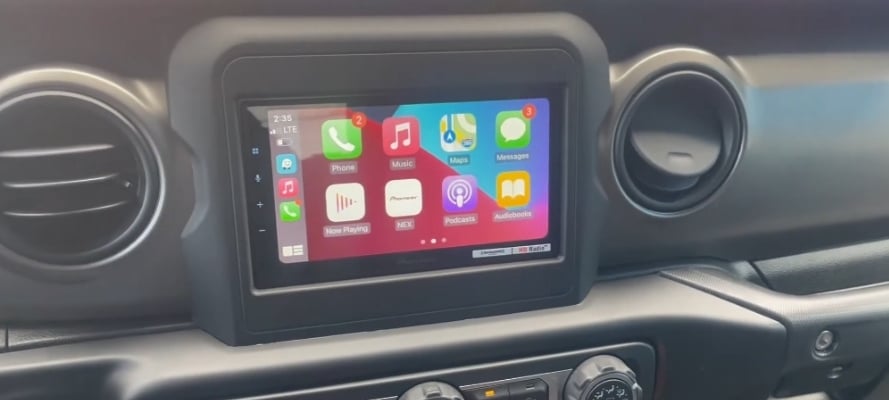
If you are searching for what is a double DIN head unit and not getting a clear answer, you're not the only one. It is a term used constantly in car audio but rarely explained in plain terms for someone new to the space. In this guide, we will explain what double DIN means, the exact dimensions, the different types available, and how to check if your vehicle supports one before you spend anything.
Table of Contents
What Does Double DIN Mean?
DIN stands for Deutsches Institut für Normung, the German standards body that created a universal sizing format for in-dash car stereos in the 1980s. The purpose was to standardize aftermarket head unit sizing so any compatible unit could fit any compatible vehicle without custom fabrication.
The standard defines two measurements: the width and the height of the dashboard stereo opening. Single DIN units are 2 inches tall. Double DIN units are exactly twice that height, at 4 inches tall. Both share the same 7-inch width.
If you are wondering what double DIN means in a car stereo, it comes down to that one measurement: the height of your dash opening. The "double" refers only to the doubled height, not doubled features or power. But that extra space is what gives double DIN units room for features a single DIN chassis simply cannot fit.
Double DIN Head Unit Size: The Exact Measurements
Understanding what double DIN is in a car stereo starts with the dimensions. A double DIN head unit fits into a dashboard opening that measures:
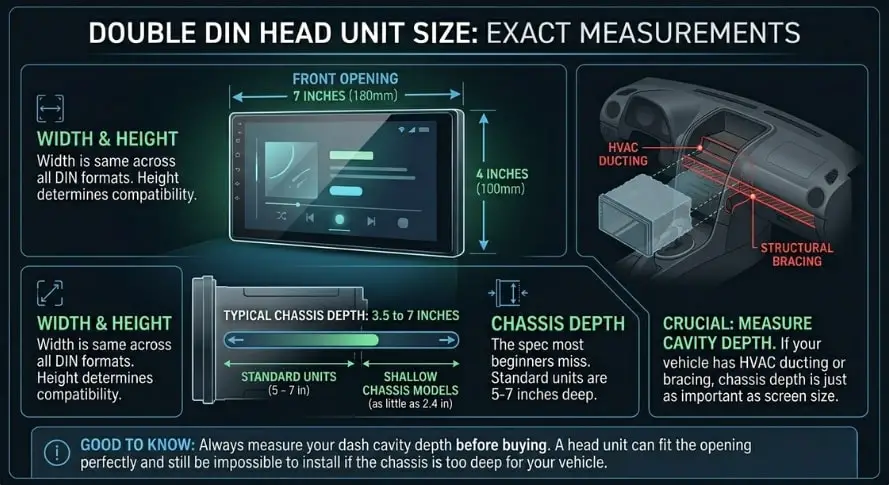
- Height: 4 inches (100mm)
- Width: 7 inches (180mm)
- Chassis depth: typically 3.5 to 7 inches, depending on the model
The width is the same across all DIN formats. Height is the measurement that determines compatibility.
Chassis depth is the spec most beginners miss. Standard units run 5 to 7 inches deep behind the dash. Shallow-chassis models, designed for vehicles with limited cavity space, can run as little as 2.4 inches deep. If your vehicle has HVAC ducting or structural bracing behind the stereo opening, chassis depth is just as important to verify as the screen size.
Good to Know: Always measure your dash cavity depth before buying. A head unit can fit the opening perfectly and still be impossible to install if the chassis runs too long for your vehicle.
Double DIN vs Single DIN: The Core Difference
The single DIN format measures 2 inches tall by 7 inches wide. Most older vehicles and compact cars were built around this size. Double DIN became the standard format in most vehicles manufactured from the mid-1990s onward.
The size difference is easy to see on paper. The practical difference is bigger. Most single DIN units use small LCD text displays, physical buttons, and rotary knobs. Some modern single DIN receivers do include floating touchscreens or flip-out motorized displays, but those screens extend beyond the slot rather than fitting within the standard 2-inch height.
Double DIN units have room for fixed displays ranging from 6.8 to 11 inches built directly into the chassis, which is what makes Apple CarPlay, Android Auto, navigation, backup camera feeds, and visual EQ interfaces possible without a protruding screen.
Types of Double DIN Head Units
A double DIN car stereo comes in several formats, and the type you choose depends on how you use your vehicle and what your dash can accommodate.
Touchscreen Digital Media Receivers (Mechless)
These are the most common type. They have no disc drive and rely on Bluetooth, USB, Apple CarPlay, and Android Auto for all media playback. No disc mechanism means shallower chassis options and more processing power for audio. If modern connectivity is your priority, this is the type you will be shopping in.
CD and DVD Receivers
These units include a disc drive alongside the touchscreen interface. Less common now, but Pioneer and Kenwood still offer them for drivers who use physical media or need DVD playback for rear seat screens. The con is a deeper chassis to house the disc slot.
Floating Screen Receivers
Floating screen units extend a large display outward on an adjustable arm rather than fitting the screen within the DIN slot itself. Screens range from 8 to 11 inches, larger than what any standard DIN opening can hold flush. They come in both single DIN and double DIN chassis configurations and are grouped under the floating screen category based on how the display mounts rather than the chassis size.
Mechless No-Screen Receivers
These double DIN units use a small LCD or text display rather than a touchscreen. They handle Bluetooth, USB, and AM/FM without a visual interface. Most commonly used in classic car restorations where the owner wants modern connectivity behind a clean, low-profile face.
Key Features You Get with a Double DIN Unit
The extra height gives double DIN units room for features a single DIN chassis cannot offer. These are the ones worth knowing before you buy.
- Touchscreen Display: Capacitive panels between 6.8 and 10.1 inches. More responsive and sharper than resistive screens. Full comparison here.
- Apple CarPlay and Android Auto: Supported by most major-brand units above $120, wired or wirelessly. Mirrors your phone's interface for navigation, calls, and music. CarPlay vs Android Auto.
- Audio Tuning Controls: 13-band graphic EQ, digital time alignment, and crossover filters on most mid-range and above units. Makes a real difference in amplified setups.
- Preamp Outputs: 2V, 4V, or 5V depending on the unit. Higher voltage means a cleaner, quieter signal to your amplifier.
- Backup Camera Input: At least one rear camera input on virtually all current units. Many support front and rear simultaneously.
- iDatalink Maestro Compatibility: Available across Pioneer, Kenwood, Alpine, Sony, and JVC. Retains factory steering wheel controls, OEM cameras, and vehicle data after the install.
How to Check If Your Car Supports a Double DIN
Before you buy any head unit, confirming your dash opening should be the first step. Three ways to do it:
- Measure the opening: A double DIN slot is 4 inches tall and 7 inches wide. Pull out your current unit, measure the slot, and you have your answer.
- Check your owner's manual: Most manuals list the stereo format under the audio or entertainment section.
- Use an online fit guide: Crutchfield, Sonic Electronix, and Amazon all offer tools where you enter your year, make, and model to confirm compatibility.
For a full step-by-step walkthrough, we have put one together here: How to Identify Head Unit Size.
Quick Tip: Even when your opening is the correct size, you'll almost always need a vehicle-specific dash kit to fill the gap around the new unit and give a clean, factory-finish look.
Is a Double DIN Upgrade Worth It?
For most car owners, yes. Replacing a factory or older single DIN unit with a double DIN head unit is a genuine improvement.
You get a larger, more readable screen. You get CarPlay or Android Auto for safer smartphone use while driving. You get proper audio tuning controls that can noticeably improve sound quality even with your existing speakers. And you get camera input support, which makes reversing and parking safer.
The job does require a dash kit, a wiring harness adapter, and some installation prep. But for most vehicles it is a manageable DIY project, and the result is well above what any factory setup offers.
If you're ready to look at specific models, here are the best double DIN car stereos for 2026 across every budget and use case.
Recommended next reads: