

A single-DIN opening was never built to hold an 11-inch touchscreen, and that mismatch is exactly why floating screen car stereos exist. Rather than sitting flush inside a factory-size chassis, the display mounts on an adjustable arm and sits above the dash, giving you a screen two or three sizes bigger than the opening technically allows.
So how do you separate a floating display that's actually worth installing from one that wobbles, blocks your vents, or pairs a nice screen with a weak amplifier? We researched the best floating screen car stereo options for 2026, checking manufacturer specifications against real owner feedback across both single-DIN and double-DIN builds, and narrowed the field to seven stereos that earned their spot for a specific reason rather than brand name alone.
Everything below is organized by DIN size first, since that's the fitment question you'll answer before anything else about the unit matters. If you're trying to find a floating car stereo that's actually worth installing, you're in the right place.
Table of Contents
Best Floating Screen Car Stereos at a Glance
Here's the short version of each pick, pulled straight from the full reviews below. Jump to whichever one matches your dash and your priorities.
1. Sony XAV-AX8500 ( Best Single DIN Overall)
Six preamp channels, a 14-band EQ, and hi-res FLAC/DSD playback make this the deepest tuning option in a single-DIN chassis.
2. Alpine Halo11 iLX-F511 (Best 11-Inch Screen)
The largest display in this guide, built into a single-DIN chassis with a 13-band parametric EQ per channel.
3. Pioneer DMH-WT3800NEX (Best 9-Inch Overall)
A 9-inch floating display backed by a real MOSFET amp and a 6-channel preamp, not just a bigger screen.
4. BOSS BVCP9700A-FL (Best 7-Inch Under $200)
Wireless CarPlay and Android Auto on a 7-inch floating screen at the lowest price in this guide.
5. Kenwood eXcelon Reference DMX1057XR (Best Double DIN Overall)
A 10.1-inch floating display with a 13-band parametric EQ, DriveEQ, and four camera inputs.
6. ATOTO S8 Gen4 (Best Built-In 4G LTE)
An Android-based double-DIN unit with its own SIM slot, so wireless CarPlay doesn't have to eat your phone's hotspot.
7. Jensen J1CA8FL (Best 8-Inch for Shallow Dashes)
An 8-inch floating display on a chassis built to fit both single-DIN and double-DIN openings
4 Best Single DIN Floating Screen Car Stereos
A single-DIN opening is the more common factory cutout in older and budget-trim vehicles, and it's also the size that benefits most from a floating display, since the screen can run several inches larger than the chassis behind it. These four are the strongest single-DIN floating stereos we found for 2026, covering everything from tuning depth to sheer screen size to price.
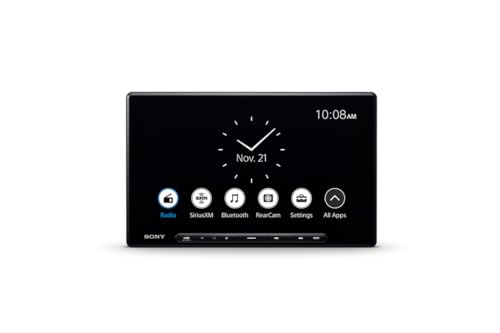
1. Best Single DIN Overall: Sony XAV-AX8500 Floating Stereo
Six preamp channels and a 14-band EQ put more tuning control in this single-DIN chassis than anything else on this list.
- Power (Peak): 55W x4
- RMS (CTA-2006): 20W x4
- Display: 10.1" capacitive touchscreen
- Screen Resolution: 1280 x 720
- Preamp Outputs: 6-channel, 5V (front/rear/sub)
- Audio Format Support: FLAC, WAV, ALAC, DSD (96kHz/24-bit)
- Smartphone Connectivity: Wireless
- Camera Inputs: 2 (rear + secondary)
- Dimensions: 10.6" x 6.6" x 10.2" (chassis)
The XAV-AX8500 earns its spot as our overall single-DIN pick because it doesn't cut corners anywhere Sony could have gotten away with it. The 10.1-inch capacitive touchscreen is the largest true single-DIN display on this list outside the Alpine pick below, and its tilt-and-swivel mount adjusts up to 15 degrees in every direction after installation, which matters more than it sounds like it should once you're trying to see the screen from an awkward driving position.
For anyone building a system around aftermarket speakers or a subwoofer, the six-channel preamp output (three pairs at 5 volts, covering front, rear, and sub) gives an installer real headroom to add outboard amplification without the signal degrading the way it does on cheaper single-preamp units. Pair that with the 14-band EQ and per-channel time alignment accurate to roughly a centimeter, and the AX8500 lets someone who knows what they're tuning get the staging right, not just the volume.
Where the receiver clearly leads the single-DIN field is high-resolution playback. It handles FLAC and WAV natively at up to 96kHz/24-bit and converts DSD files through PCM, so a USB drive loaded with lossless rips plays back without the quality ceiling that MP3-only receivers impose. We found owners running dedicated hi-res libraries specifically cite this as the reason they chose the AX8500 over competing single-DIN units capped at standard compressed formats.
Smartphone integration is fully wireless on both platforms, connecting over Wi-Fi rather than Bluetooth, which keeps the handshake quicker and more stable than the Bluetooth-tethered wireless setups some competitors still use. The trade is that Sony doesn't offer a wired fallback on this model, so if your phone's Wi-Fi radio is flaky or you'd rather charge over a cable while running CarPlay, that option isn't here. It also skips HD Radio, a feature the Kenwood pick below builds in, so AM/FM reception on the AX8500 stays standard-only. Neither limitation is a dealbreaker for most daily drivers, but they're worth knowing before you buy.
The micro-HDMI input is a genuine differentiator, letting you feed the display from an external source like a rear-seat entertainment box when parked, something none of the other single-DIN units here support. It's a niche use case for most buyers, but families running road trips with rear passengers get real value out of it.
Where the AX8500 asks you to pay for what you get is price. It's the most expensive single-DIN pick in this guide by a real margin, and buyers shopping strictly on budget will find the BOSS pick further down gets them a working floating screen for meaningfully less. What that premium buys is the combination of preamp count, tuning depth, and hi-res format support that the cheaper options simply don't match. For someone who already has, or plans to build, a system with outboard amps and a subwoofer, that's money well spent.
If tuning control and format support in a single-DIN chassis are what you're after, the Sony XAV-AX8500 is the strongest floating screen car stereo here for that priority.
2. Best 11-Inch Screen: Alpine Halo11 iLX-F511 Car Stereo
If your dash has the depth for a single-DIN chassis but you want a screen size that belongs on a double-DIN unit, the Alpine Halo11 splits that difference better than anything else here.

- Specs: Power (Peak): 50W x4; RMS (CTA-2006): 18W x4;
- Display: 11" capacitive touchscreen, adjustable height/depth;
- Screen Resolution: 1280 x 720 (WXGA);
- DIN Size: Single DIN; Preamp Outputs: 3 sets, 4V (front/rear/sub);
- Audio Format Support: AAC, APE, FLAC, MP3, WMA, WAV (96kHz/24-bit Hi-Res);
- Smartphone Connectivity: Wired and Wireless Apple CarPlay, Wired and Wireless Android Auto;
- Camera Inputs: 2 (1 rear, 1 configurable); Dimensions: Standard 1-DIN chassis (dimensions not published by Alpine);
- Warranty: 1-year limited
At 11 inches, the Halo11's display is the biggest screen in this guide by a wide margin, bigger than most factory double-DIN infotainment systems too. The panel runs at 1280x720 (WXGA) resolution and sits on a mount with five vertical adjustment positions and two depth settings, so you can push the screen closer to the dash or pull it forward depending on how much clearance your HVAC vents and climate controls need.
What separates the Halo11 from a unit that's just chasing screen size is the tuning hardware behind it. A 13-band parametric EQ per channel gives far more granular control than the simpler graphic EQs on cheaper units, and the 6-channel time correction (compared to the 3-way crossover most competitors offer) lets an installer stage the sound properly even when speakers sit in awkward, uneven positions around the cabin. Three sets of true 4-volt preamp outputs, covering front, rear, and subwoofer, give you a clean signal path if you're adding outboard amplification later.
Unlike the Sony pick above, Alpine builds in both wired and wireless support for Apple CarPlay and Android Auto, so you're not locked into a Wi-Fi connection if your phone struggles with it. That flexibility extends to the Halo11's hi-res audio playback, which supports wired 96kHz/24-bit files over USB and wireless LDAC streaming to Bluetooth-compatible Android phones. Add in the first full TIDAL integration in a car receiver, and this is a strong pick for anyone who treats music quality as a priority rather than an afterthought.
We should be honest about where the Halo11 comes up short relative to its price. The built-in amplifier is rated at 18 watts RMS per channel, the lowest RMS figure of any single-DIN pick in this guide, which means more of the audio quality here depends on adding outboard amplification rather than relying on the head unit alone. That's a reasonable trade for a receiver this focused on tuning flexibility and hi-res playback, but it's worth knowing if you're planning to run factory speakers without amps. The Halo11 also has no built-in cellular connectivity or standalone navigation the way the ATOTO pick further down does, so you're relying on your phone for maps and data.
Alpine backs the Halo11 with iDatalink Maestro compatibility, which lets it retain steering wheel controls, tire pressure readouts, and climate data from many factory systems, and it's SiriusXM-ready with a built-in HD Radio tuner if you want broadcast options beyond your phone. Installation asks for a bit more planning than a standard single-DIN unit given the screen's size, but the payoff is a display that dominates the dash without needing a double-DIN cutout.
The 3 sets of 4-volt preamp outputs also deserve a second look next to Sony's 5-volt spec above, since preamp voltage affects how much noise creeps into the signal over longer RCA cable runs to an amp or subwoofer in the trunk. Sony's higher voltage gives it a slight edge on paper for a long cable run, but Alpine's 4 volts is still well above the 2-volt output found on budget receivers, and most installers won't notice a practical difference on a typical amp placement under a seat or in a door panel.
We'd point this pick specifically at drivers who spend real time customizing their EQ curves rather than leaving the stereo on a factory preset, since that's where the 13-band parametric tuning and 6-channel time correction actually earn their keep. If you mostly stream music through CarPlay and rarely touch the sound settings, you'll still get a great-looking dash, but you won't use everything you paid for.
If screen real estate is your top priority and you're willing to add power down the road, the Alpine Halo11 iLX-F511 delivers the biggest single-DIN display available right now.
3. Best 9-Inch Overall: Pioneer DMH-WT3800NEX Floating Stereo
A 9-inch screen this size usually comes with a thin amplifier section, but the Pioneer DMH-WT3800NEX backs its display with real sound-shaping power instead of leaving it at CarPlay and not much else.

- Power (Peak): 50W x4; RMS (CTA-2006): 14W x4;
- Display: 9" capacitive floating touchscreen;
- Screen Resolution: 16:9 aspect;
- DIN Size: Single DIN; Preamp Outputs: 6-channel RCA, 2V;
- Smartphone Connectivity: Wired and Wireless Apple CarPlay, Wired and Wireless Android Auto;
- Camera Inputs: 2; Dimensions: 7.03" x 1.98" x 6.74" (chassis);
- Warranty: 1-year)
We found the DMH-WT3800NEX stands out in the 9-inch class specifically because Pioneer didn't treat the screen as the whole pitch. The 13-band customizable EQ, paired with HPF/band-pass/LPF crossover modes, gives you real control over how the built-in MOSFET amp shapes sound, and the 6-channel RCA preamp output (rated at 2 volts) means you're not locked out of adding a proper amp and subwoofer down the line.
Connectivity here covers both bases most shoppers care about. Apple CarPlay and Android Auto both work wired or wireless, so you're not stuck with one connection method if your phone or cable situation changes. The receiver also supports split-screen mode, letting you keep navigation visible alongside media controls, and a light/dark display mode that adjusts to ambient lighting rather than forcing one look regardless of time of day.
Where the numbers get a little more complicated is amplifier output. Pioneer publishes a 50-watt peak figure per channel, but the CTA-2006-certified continuous rating, the number that actually reflects sustained real-world output, comes in at 14 watts RMS per channel. That's the lowest RMS rating of any pick in this guide, single-DIN or double-DIN, and it's the kind of gap we'd flag for anyone chasing loud, clean sound at higher volumes rather than just background listening. It doesn't make the amp bad, factory speakers run fine off it for daily use, but anyone chasing louder, cleaner sound at higher volumes should plan on adding an external amp rather than expecting the internal one to carry a full system.
The DMH-WT3800NEX also caps its load impedance allowance at 4 to 8 ohms, which is standard for this class but worth flagging if you're running unusual speaker setups. And like most receivers built around video playback, it requires a wired connection to your parking brake to unlock video features while parked, a legal safety requirement rather than a Pioneer-specific quirk, but one more wire an installer needs to account for.
On the practical side, this unit works with the iDatalink Maestro module to retain factory features across a wide range of vehicles, meaning you don't necessarily lose steering wheel controls or dashboard readouts when you swap out the factory stereo. SiriusXM compatibility is built in if you want satellite radio alongside your phone-based options, and the two camera inputs give you room for both a front and rear camera setup.
Pioneer also backs this receiver with its CarAVAssist companion app, available for both Android and iPhone, which lets you adjust EQ settings, check firmware status, and reference the owner's manual from your phone rather than digging through on-screen menus while parked. It's a small addition, but for anyone who'd rather fine-tune their system from a phone screen than a touchscreen mounted at arm's length, it's a genuine convenience the cheaper BOSS pick below doesn't offer.
Daily commuters get a clear, simple win here, a bright, responsive 9-inch display for CarPlay and Android Auto with enough EQ depth to sound noticeably better than a factory system. Weekend audio enthusiasts building out a fuller system get the 6-channel preamp and crossover control to do it properly. Where the DMH-WT3800NEX asks for a compromise is with anyone chasing maximum volume from the internal amp alone, since the 14-watt RMS rating means that job increasingly shifts to an external amplifier rather than the receiver itself.
For a 9-inch floating stereo that treats the amplifier and EQ as seriously as the screen, the Pioneer DMH-WT3800NEX is the strongest all-around option in this size class.
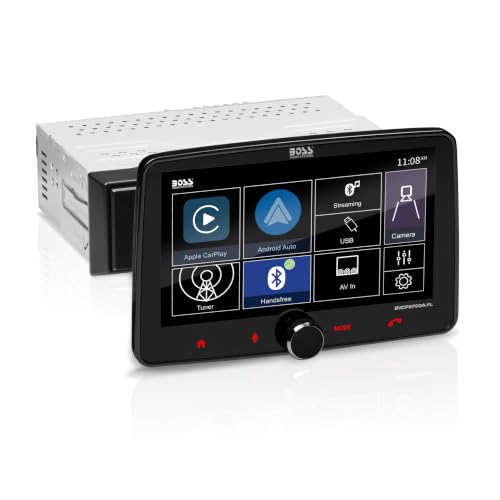
4. Best 7-Inch Under $200: BOSS BVCP9700A-FL Car Stereo
The BOSS BVCP9700A-FL proves a floating screen doesn't have to cost double-DIN money to work.
- Power (Max): 340W (system total);
- Display: 7" capacitive touchscreen;
- Screen Resolution: 800 x 480;
- DIN Size: Single DIN;
- Audio Format Support: MP3, WMA (full codec list not published); Smartphone
- Connectivity: Wireless Apple CarPlay, Wireless Android Auto; Camera Inputs: Not published;
- Warranty: 3-year (per retailer documentation)
Every other single-DIN pick in this guide asks you to pay a premium for a floating screen, and the BVCP9700A-FL is the exception. It brings a 7-inch capacitive touchscreen with wireless Apple CarPlay and wireless Android Auto to a price bracket where most competitors are still selling fixed, non-floating displays, and it does so with a mech-less design (no CD or DVD tray) that keeps the chassis shallow enough for tighter dash spaces.
BOSS doesn't publish a CTA-2006 RMS figure for this unit the way Sony, Alpine, Pioneer, and Kenwood do, only a 340-watt peak system rating, so we can't give you an apples-to-apples power comparison against the pricier picks above. What we can say, based on owner feedback across BOSS's floating-screen models at this price, is that the amplifier is adequate for factory speakers and casual listening, not something you'd pair with an aftermarket component set expecting audiophile results. If clean, loud sound at higher volumes matters more to you than price, the Sony or Pioneer picks above will get you there; if you mainly want CarPlay on a bigger screen without breaking your budget, this does the job.
Bluetooth handles hands-free calling and audio streaming reliably, and the multi-color illumination lets you match the display's accent lighting to your interior rather than being stuck with a single factory-set tone. The touchscreen itself runs at a lower 800x480 resolution than the higher-end picks in this guide, which is noticeable in text sharpness on maps and menus, but it's not a dealbreaker at this price point and most buyers cross-shopping in this bracket won't be disappointed by it.
Where BOSS pulls ahead of expectations is warranty coverage. Retailer documentation for this unit lists a 3-year warranty, longer than what Sony, Alpine, or Pioneer publish for their single-DIN units above, which meaningfully changes the risk calculation on a budget purchase. A longer warranty on a lower-cost unit is exactly the kind of trade that makes sense for someone who wants CarPlay working reliably without gambling on an expensive receiver.
One thing BOSS's published materials don't clarify is a detailed preamp output spec or full camera input count, information the pricier picks in this guide document clearly. If you're planning to add outboard amps, a subwoofer, or multiple cameras down the line, that's worth asking a BOSS dealer about directly before you buy, since it's the one area where this pick's documentation trails the rest of the field.
The mech-less chassis is worth calling out on its own. Dropping the CD/DVD tray cuts manufacturing cost, and as a side effect it also shortens the mounting depth the receiver needs behind the dash. For older vehicles with shallower single-DIN cavities, or for anyone who's previously struggled to fit a disc-based unit behind their factory trim, that shallower depth can be the difference between an easy install and a fight with the dash brackets.
We'd point this pick specifically at first-time buyers replacing a factory stereo on a tight budget, or anyone outfitting a second or older vehicle where spending Sony or Alpine money doesn't make financial sense. It's not the receiver for someone planning to build a serious aftermarket sound system, but for CarPlay on a bigger screen at the lowest entry cost in this guide, it does exactly what it needs to.
For drivers who want a floating screen and wireless CarPlay without paying double-DIN prices, the BOSS BVCP9700A-FL earns its spot as the budget pick in this guide.
3 Best Double DIN Floating Screen Car Stereos
A double-DIN opening gives a floating display more room to work with from the start, which usually means a bigger built-in amplifier, more camera inputs, and features like cellular connectivity that a single-DIN chassis can't fit. These three double-DIN picks each lead the field for a different reason.
5. Best Double DIN Overall: Kenwood eXcelon Reference DMX1057XR Stereo
Where most double-DIN floating units treat the screen as the whole story, the Kenwood DMX1057XR backs its 10.1-inch display with processing depth most receivers this size don't bother with.

- Power (Peak): 50W x4
- RMS (CTA-2006): 22W x4
- Display: 10.1" HD floating capacitive touchscreen
- Screen Resolution: 1280 x 720
- Preamp Outputs: 6-channel, 5V (front/rear/sub)
- Audio Format Support: FLAC, WAV, DSD (via USB)
- Smartphone Connectivity: Wireless Apple CarPlay, Wireless Android Auto
- Camera Inputs: 4 (2 HD, plus dash cam and standard inputs)
- Dimensions: 10.31" x 7.13" (monitor)
The DMX1057XR posts the highest RMS power rating in this entire guide at 22 watts per channel (CTA-2006 certified), which puts real distance between it and the Pioneer and BOSS picks above. That extra headroom matters if you're running factory speakers without plans to add an amp, since it means less of the system's performance depends on outboard gear you'd have to buy separately.
What we found actually sets this receiver apart from a typical double-DIN floating unit is its tuning suite. A 13-band parametric EQ handles frequency shaping, a Stage EQ feature compensates for speakers mounted low in the cabin (a common issue with factory door and dash placements), and DriveEQ boosts specific frequency ranges to fight road noise at highway speeds. Layer a 3-way crossover on top of that, and this is a receiver built for someone who wants to actually tune their system, not just accept whatever the factory EQ curve gives them.
Camera support is another area where our research found the DMX1057XR pulls ahead. It handles four separate camera inputs, including two high-definition feeds and direct compatibility with Kenwood's own DRV-N520 dash cam, which is more coverage than any other pick in this guide offers. For anyone running a front dash cam, a rear backup camera, and a side-view camera simultaneously, that's the kind of headroom you don't find on cheaper double-DIN units.
The 10.1-inch display uses Kenwood's AAS (Advanced Angle Screen) technology for a wider viewing angle than a standard capacitive panel, which is a genuine practical benefit if you've got passengers glancing at the screen from an angle rather than sitting dead center. Built-in HD Radio and LDAC wireless hi-res streaming round out the audio side, giving Android users a path to better-than-Bluetooth sound quality without needing a USB cable.
Where the DMX1057XR asks more of you is price and setup. It's the most expensive double-DIN pick in this guide, and like the Pioneer unit above, it requires a wired parking brake connection to unlock video playback while parked. It also has no built-in cellular modem, so if always-on internet access without relying on your phone's hotspot is a priority, the ATOTO pick below handles that specific need better. What the Kenwood pick offers instead is a 2-year manufacturer warranty, a full year longer than most of the single-DIN options above, which is a real reassurance on a receiver in this price bracket.
The four-camera capacity is worth spelling out further, since it's rare to find at this price. A driver running a front dash cam for insurance purposes, a rear backup camera for parking, and Kenwood's own DRV-N520 recorder simultaneously can do all three without an aftermarket switch box, something that typically adds both cost and another point of failure to a camera setup. Rideshare or delivery drivers who want that level of documentation built in rather than bolted on are a natural fit for this receiver specifically.
Between the RMS rating, the camera inputs, and the DriveEQ road-noise compensation, this is a receiver aimed at drivers who spend real hours behind the wheel and want the system to reflect that, not someone who just wants a bigger screen for occasional errands.
For drivers who want the deepest tuning control and camera support in a double-DIN floating stereo, the Kenwood eXcelon Reference DMX1057XR is the strongest all-around pick in this guide.
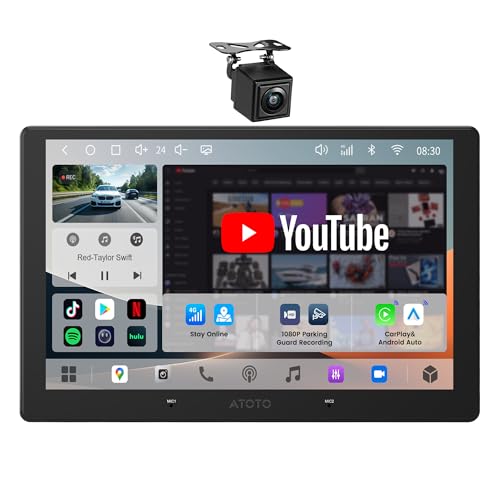
6. Best Built-In 4G LTE: ATOTO S8 Gen4 10.1-Inch Car Stereo
Wireless CarPlay eats your phone's hotspot fast when you're relying on it for navigation and streaming both, and the ATOTO S8 Gen4 sidesteps that problem with a built-in 4G modem of its own.
- Power (Peak): 45W x4; RMS: 24W x4;
- Display: 10.1" QLED capacitive touchscreen;
- Screen Resolution: 1280 x 800;
- DIN Size: Double DIN
- Processor & Memory: Octa-core 12nm SoC (2.2GHz), 4GB RAM, 64GB storage
- Internet Connectivity: 4G LTE (nano SIM), Wi-Fi 2.4/5GHz, USB tethering; Smartphone
- Connectivity: Wireless Apple CarPlay, Wireless Android Auto only (no wired option); Camera Inputs: Up to 3;
- Dimensions: Standard double-DIN chassis (exact dimensions not published);
- Warranty: 1-year standard, plus 180 days with product registration
The S8 Gen4 isn't really competing on screen size or amplifier specs, though its 10.1-inch QLED display and 45-watt peak per channel both hold their own against the rest of this guide. What sets it apart is that it's a genuine Android computer running the car stereo, not a receiver with a smartphone-mirroring feature bolted on. An octa-core processor, 4GB of RAM, and 64GB of storage run Android 13 directly on the unit, which means it can download apps from the Google Play Store, store offline maps, and function as a standalone infotainment system even without a phone connected.
The built-in 4G LTE modem, activated with your own nano SIM, is what we'd call the specific reason this pick earned its spot in this guide. Running wireless CarPlay or Android Auto over Wi-Fi already puts a load on your phone's data connection, and doing that while also streaming music or running turn-by-turn navigation can drain a phone's battery and data plan faster than most drivers expect. With its own SIM and LTE connection, the S8 Gen4 handles its own navigation, streaming, and AI assistant features independently, so your phone isn't the single point of failure for staying connected on the road.
Audio tuning runs through a 32-band DSP with time alignment, a deep level of control for an Android-based receiver, and the unit outputs through 4-volt RCA preamps alongside optical and coaxial digital outputs, giving you a clean signal path to external amps or DSP boxes if you want to build out a fuller system later. What you give up in exchange is a wired connection option, since ATOTO only supports wireless CarPlay and Android Auto here, so if your phone's wireless connection is unreliable, you don't have a cable fallback the way you do with the Alpine or Pioneer picks above.
We should flag two honest limitations. First, 4GB of RAM is workable for an Android car stereo but it's on the lower end for a unit running navigation, a voice AI assistant, and CarPlay mirroring simultaneously; some owners report occasional slowdowns under heavy multitasking, which tracks with what you'd expect running that much software on that much memory. Second, at 10.1 inches, the display is large enough that ATOTO itself notes it may partially cover HVAC vents or control buttons in some vehicles, so it's worth checking your dash's specific layout before ordering.
On the safety side, the built-in G-sensor supports automatic incident recording with video locking after a serious impact, plus parking-mode monitoring when paired with a compatible camera, features that go beyond what a standard receiver offers.
This is a particularly strong fit for drivers who spend a lot of time outside strong cell coverage from their own carrier, since you can pick a SIM plan or provider independently of your phone, or for anyone who regularly hands the car to a passenger or teen driver who needs navigation and music without needing your phone in the vehicle at all. It's less of a fit for someone who already has an unlimited data plan and rarely drives outside their phone's coverage, since the core benefit of the built-in modem goes largely unused in that case.
If staying connected without leaning on your phone's data plan is the priority, the ATOTO S8 Gen4 is the clear pick for that specific need in this guide.
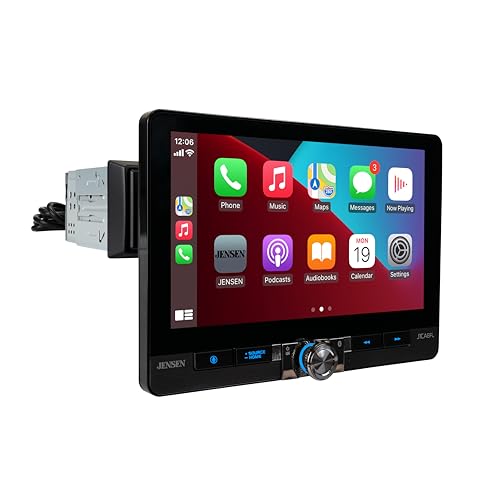
7. Best 8-Inch for Shallow Dashes: Jensen J1CA8FL Car Stereo
Not every vehicle has room behind the dash for a deep chassis. The Jensen J1CA8FL was built for the ones that don't.
- Power (Max): 240W (system total);
- Display: 8" floating touchscreen;
- Screen Resolution: 1024 x 600;
- DIN Size: Fits both Single DIN and Double DIN (included mount adapter);
- Preamp Outputs: Not published; Audio
- Smartphone Connectivity: Wired and Wireless Apple CarPlay, Wired and Wireless Android Auto;
- Camera Inputs: 2 (front and rear);
- Warranty: 1-year standard, extendable to 4 years with product registration
The single detail that puts the J1CA8FL on this list is fitment flexibility. Where every other pick here is built for one DIN size, Jensen ships this unit with a mount adapter that lets the same chassis install in either a single-DIN or double-DIN opening, which matters a lot if you're shopping for a vehicle with an unusually shallow dash or a non-standard factory cutout and don't want to gamble on a fixed-size chassis not fitting.
Smartphone connectivity here covers both wired and wireless Apple CarPlay and Android Auto, which is certified rather than an aftermarket workaround, giving you the flexibility the Sony pick above lacks if you want a cable option as backup. Dual USB ports support 2.1-amp fast charging, so passengers aren't stuck waiting on a slow trickle charge during longer drives, and front and rear camera inputs cover the two most common camera setups without needing an adapter box.
We don't have a full power or preamp picture here the way we do for the Sony, Alpine, Pioneer, or Kenwood units above. Jensen publishes a 240-watt maximum system output but no CTA-2006 RMS figure and no preamp voltage spec for this exact model, which makes it harder to judge how this unit would perform paired with outboard amplification. Based on where this receiver sits among Jensen's other floating-screen models, we'd expect it to handle factory speakers competently without being a strong choice for anyone planning a serious aftermarket build, but that's a reasonable inference rather than a confirmed spec.
The 1024x600 display resolution is also a step down from the 1280x720 or 1280x800 panels on the pricier double-DIN picks in this guide, which shows up mostly in text sharpness on smaller UI elements rather than in overall usability. For drivers whose main priority is fitting a floating screen into a dash that won't take a standard-size unit, that's a reasonable trade.
What stands out on the ownership side is Jensen's warranty structure. The standard coverage runs one year, but registering the product after purchase extends that to four years, among the longer warranty terms in this guide once you account for the registration step. That's worth doing immediately after installation rather than treating it as optional paperwork.
The dual-fit chassis is especially useful for anyone shopping for a vehicle they haven't measured yet, a second car, a hand-me-down for a teen driver, or a work truck with an older factory opening. Rather than researching your exact DIN size before you can even start comparing units, the J1CA8FL lets you buy first and adapt during install, using the included mounting hardware to bridge whichever opening you're working with.
The front and rear camera inputs are also worth calling out for anyone cross-shopping this against the single-purpose single-DIN picks above. A front-facing camera paired with this receiver gives you a continuous forward recording for insurance and dispute purposes, while the rear input handles standard backup camera duty, and having both built into the base unit means you're not paying extra for a second input down the line the way you might with a more basic receiver.
If your dash won't cooperate with a standard single-DIN or double-DIN floating stereo, the Jensen J1CA8FL is the pick in this guide built specifically to solve that problem.
Single DIN or Double DIN: Which One Fits Your Dash?
Before you fall in love with a specific screen size, check your owner's manual or measure your existing stereo's opening, since this decision is made for you by your vehicle, not by preference. A single DIN or double DIN opening is roughly 2 inches tall versus 4 inches tall, and no amount of wanting a bigger screen changes what your dash physically accepts.
If you've got a single-DIN opening, that's not actually a limit on screen size the way it used to be. The Sony, Alpine, Pioneer, and BOSS picks above all mount their displays on an arm that extends well beyond the chassis, which is how the Alpine Halo11 fits an 11-inch screen into an opening built for a fraction of that size. Single-DIN openings are more common in older vehicles, base trims, and trucks, so if you're working with an older daily driver, start there.
A double-DIN opening gives you more chassis depth to work with, which is why the Kenwood, ATOTO, and Jensen picks above pack in extras like four camera inputs, a built-in 4G modem, or dual-DIN mounting flexibility. If your vehicle already has a factory double-DIN system, replacing it with another double-DIN unit is usually the simpler install, since you're not adjusting the dash opening itself.
The Jensen J1CA8FL is the one exception worth calling out here, since its included adapter lets it fit either opening. That makes it a reasonable fallback if you're not entirely sure which size your dash takes, or if you're shopping before you've measured.
What to Look for in a Floating Screen Car Stereo
Once you know your DIN size, a handful of other factors separate a floating screen car stereo you'll be happy with from one you'll regret installing. Here's what actually matters once fitment is settled.
Confirm Your Dash Opening and Vent Clearance First
Before you buy anything, you need to know two things about your vehicle, the DIN size of your existing opening and how much room you have around it for a floating display to sit without blocking your HVAC vents, hazard button, or climate controls. A screen that looks great in a product photo can end up covering half your dash controls in your specific car, which is exactly the complaint ATOTO itself flags for its 10.1-inch S8 Gen4 in some vehicles.
Measure twice, and if you're between sizes or unsure, a unit like the Jensen J1CA8FL that fits either DIN size buys you flexibility while you figure out the rest of your decision.
Match Preamp Outputs to Your Future Speaker Plans
If you're running factory speakers now but might add an amplifier or subwoofer later, preamp output count and voltage should carry more weight in your decision than almost anything else in the spec block. A receiver with three sets of preamp outputs at 4 or 5 volts, like the Sony, Alpine, or Kenwood picks above, gives you a clean signal path for front, rear, and subwoofer amplification without needing to rewire the head unit down the line.
If you already know you'll never add outboard amps, this factor matters far less, and you can prioritize screen size or price instead.
Decide How Much You Need Wireless Versus Wired CarPlay
Wireless CarPlay and Android Auto are convenient until your phone's Wi-Fi connection has a bad day, and then a wired fallback becomes a real asset rather than a nice-to-have. The Alpine, Pioneer, and Jensen picks above all support both wired and wireless connections, while the Sony and ATOTO units are wireless-only.
If you've had wireless CarPlay drop out on you before, or you'd rather charge your phone over a cable during long drives anyway, weight that toward a unit with a wired option built in.
Weigh Screen Size Against Real Amplifier Power
It's tempting to shop by screen size alone, but a bigger display doesn't tell you anything about how loud or clean the built-in amplifier actually runs. The Kenwood DMX1057XR posts the highest RMS rating in this guide at 22 watts per channel, while the Alpine Halo11, despite its larger 11-inch screen, comes in lower at 18 watts RMS because Alpine put more of its engineering budget into tuning depth than raw output.
If you're running factory speakers without plans to add an amp, check the RMS number, not just the screen size, before you decide.
Check Whether You Need Standalone Connectivity
Most drivers get navigation and streaming through their phone via CarPlay or Android Auto, which works fine as long as your phone has signal and battery. If you frequently drive in areas with spotty phone coverage, or you'd rather not drain your phone's data plan running navigation and music simultaneously, a unit with its own cellular connection, like the ATOTO S8 Gen4's built-in 4G LTE, solves a problem the other picks in this guide simply don't address.
Floating Screen Car Stereo FAQs
What is a floating screen car stereo?
A floating screen car stereo is a head unit where the touchscreen display sits on an adjustable arm above the chassis rather than being built flush into it. This lets the screen run larger than the DIN opening it's installed in, since only the chassis behind the display has to fit the factory cutout.
Is a floating screen car stereo hard to install?
Installation difficulty depends more on your vehicle's wiring and dash trim than on the floating design itself. We'd recommend professional installation for most drivers, particularly for units like the Kenwood or Pioneer picks above that require a wired parking brake connection to unlock video playback, since getting that wiring wrong affects both function and safety.
Can a floating display car stereo fit any dash?
Not automatically. Floating stereos still come in single-DIN and double-DIN chassis sizes, and the screen extending beyond the chassis doesn't change what opening the unit itself needs. Check your vehicle's existing DIN size before shopping, or consider a dual-fit unit like the Jensen J1CA8FL if you're unsure.
Which is better, single DIN or double DIN, for a floating screen?
Neither is universally better since your vehicle decides which one you can install. That said, we'd point double-DIN shoppers toward the Kenwood DMX1057XR for the strongest all-around combination of power and features, and single-DIN shoppers toward the Sony XAV-AX8500 if tuning depth matters most, or the Alpine Halo11 if screen size is the priority.
Do floating screen car stereos support wireless Apple CarPlay?
Most current floating screen units do, including six of the seven picks in this guide. Support varies on whether wired CarPlay is also available as a backup, which the Alpine, Pioneer, and Jensen picks offer and the Sony and ATOTO units don't.
What's the best floating screen car stereo for a small budget?
Among the picks in this guide, we'd point budget shoppers toward the BOSS BVCP9700A-FL. It's the only single-DIN unit here priced below the rest of the field with wireless CarPlay and Android Auto, backed by a 3-year warranty that helps offset the risk of buying at the lower end of the price range.
Can I add a subwoofer to a floating screen head unit?
Yes, as long as the receiver has preamp outputs rated for a subwoofer channel, which the Sony, Alpine, Pioneer, Kenwood, and ATOTO picks above all include. You'll need a separate amplifier to actually power the subwoofer, since none of these receivers drive a sub directly off their internal amp.
Final Verdict: Two Winners, One for Each Dash Type
After weighing tuning depth, power, connectivity, and price across all seven, the best floating screen car stereo for you depends most on which DIN size you're working with, since that decision splits our top picks cleanly in two.
For single-DIN dashes, the Sony XAV-AX8500 is our top recommendation. Its six-channel preamp output, 14-band EQ, and hi-res FLAC/DSD support give it more tuning depth than anything else in a single-DIN chassis, even if you'll pay a premium for it. If screen size matters more to you than tuning control, the Alpine Halo11 iLX-F511 is the runner-up worth a close look, since its 11-inch display is larger than some factory double-DIN systems.
For double-DIN dashes, the Kenwood eXcelon Reference DMX1057XR takes the top spot, backing its 10.1-inch display with the highest RMS power and the deepest camera support in this guide. If staying connected without relying on your phone's data plan matters more to you, the ATOTO S8 Gen4 is the standout alternative thanks to its built-in 4G LTE modem, and if your dash won't cooperate with a standard opening at all, the Jensen J1CA8FL is built specifically to solve that problem.
Whichever one you land on, you'll get a screen that outsizes its opening and a stereo built for how you actually use your car.