
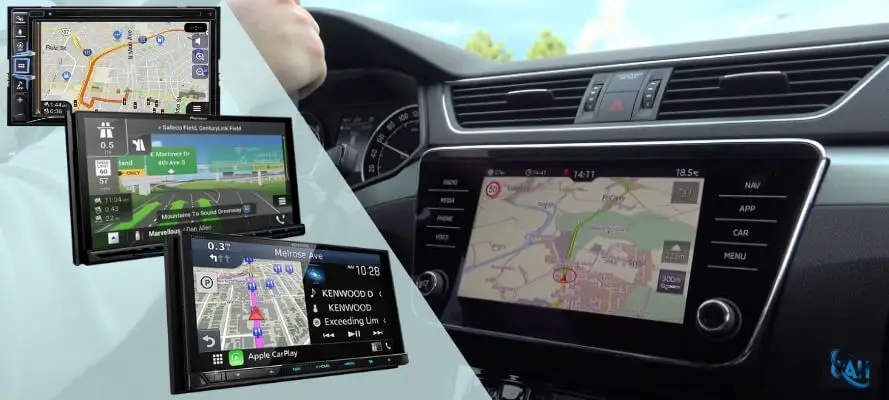
When you are shopping for the best car stereo with GPS, it is no longer just about getting directions. Drivers want a unit that delivers reliable navigation, smooth music streaming, and smart features that upgrade the entire dashboard experience. Our pick for most drivers is the Pioneer AVIC-W8600NEX, which pairs offline HERE maps with three pairs of 4V pre-outs.
We put this guide together to help you cut through the noise and focus on what actually matters, which is verified specs, firmware stability, brand consistency, and what owners report after living with these units. Every figure below was checked against the manufacturer product page, cross-checked against retail listings where the manufacturer does not publish a number, and weighed against patterns in owner and installer discussions.
If you are ready for a GPS head unit that combines reliability with convenience, you are in the right place.
Table of Contents
Our Top Picks at a Glance
If you already know roughly what you want, start here. Each line names the unit, what it actually does best, and who it suits.
1. Best Overall: Pioneer AVIC-W8600NEX
Offline HERE maps, three pairs of 4V pre-outs and a 13-band EQ make this the most complete GPS head unit here for drivers planning a full amplifier build.
2. Best Garmin: Kenwood eXcelon DNX997XR
Genuine Garmin guidance with 3D terrain view, a sharp 1280 x 720 HD panel and 5V pre-outs, which is the strongest signal voltage anywhere in this roundup.
3. Best Shallow Dash Fit: Alpine INE-W970HD
A 5.6 inch chassis depth, the shallowest of all ten, with built-in maps of the United States and Canada and a deliberately simple wired CarPlay interface.
4. Best Split-Screen: ATOTO S8 S8G2A74MS
Runs a map and a second app side by side on a 7 inch QLED panel, with 4G LTE built in and a 32-band DSP, though its only RCA output is a 0.8V sub out.
5. Best Big Screen Upgrade: ATOTO S8 Ultra S8G2099UN
A 9 inch QLED panel paired with 4V RCA outputs and a 4 x 29W RMS amplifier, which makes it the most capable audio platform among the Android picks here.
6.Best Phone-Free Navigation: BOSS Elite BV960NV
Preloaded maps on an installed microSD card with lane guidance and spoken street names, built for the driver who would rather never pair a phone at all.
7. Best Factory-Fit for Corolla: SYGAV Android Head Unit
Drops into Toyota Corolla dashboards without a trim kit, and adds wireless CarPlay, Android Auto and Play Store apps to an otherwise stock looking cabin.
8. Best Budget All-Rounder: ATOTO A6PF
Wireless CarPlay, a 36-band EQ and a deliberately short chassis for tight dash cavities, which is an unusual combination at this price for a double-DIN.
9. Best OEM-Style GPS: Eonon GMX7
A direct-replacement 8 inch Android 14 unit for Chevrolet and GMC dashes that keeps steering wheel controls, factory cameras and CANBUS features intact
10. Best Plug & Play: IIWEY Portable
An 11 inch wireless CarPlay screen that powers from the 12V socket and moves between cars, with no dash disassembly at all and no built-in GPS of its own.
Compare Our Best GPS Car Stereos
Pick | Screen Size | Navigation Type | CarPlay / Android Auto | Preamp Voltage | Check Price |
|---|---|---|---|---|---|
1. Pioneer AVIC-W8600NEX | 6.94" | Built-in HERE GPS | Wired & Wireless | 4V | |
2. Kenwood eXcelon DNX997XR | 6.8" | Garmin GPS | Wired & Wireless | 5V | |
3. Alpine INE-W970HD | 6.5" | Built-in GPS | Wired Only | 4V | |
4. ATOTO S8 S8G2A74MS | 7" | App-based, online + offline | Wired & Wireless | Sub out only, 0.8V | |
5. ATOTO S8 Ultra S8G2099UN | 9" | App-based, online + offline | Wired & Wireless | 4V | |
6. BOSS Elite BV960NV | 6.2" | Built-in GPS, preloaded maps | Neither | 2V | |
7. SYGAV Android Head Unit | Not published | App-based, online + offline | Wireless | Not published | |
8. ATOTO A6PF | 7" | App-based, online + offline | Wireless | Not published | |
9. Eonon GMX7 | 8" | App-based Android GPS | Wired & Wireless | Not published | |
10. IIWEY Portable | 11" | Phone-based, no built-in GPS | Wireless | None |
Top 3 High-End GPS Car Stereos (Premium Picks)
If you want the very best in navigation and audio, these premium GPS car stereos are built for you. They combine reliable mapping, advanced tuning, and full smartphone integration. Our top three cover three different problems, which are the most complete package overall, the strongest Garmin guidance, and the shallowest chassis for a tight dash.
1. Best Overall: Pioneer AVIC-W8600NEX GPS Navigation Car Stereo
The AVIC-W8600NEX earns Best Overall because nothing else here combines offline HERE mapping with three pairs of 4V pre-outs and a 13-band EQ in the same chassis. It is the one pick that does not force a compromise between navigation and audio.

Power Output | 22W RMS x 4 as rated by Pioneer, 14W RMS x 4 under CTA-2006, 50W peak x 4 |
Preamp Voltage | 4V, three pairs, six channels |
Screen | 6.94 inch capacitive, 800 x 480 WVGA |
Audio EQ | 13-band graphic equalizer |
Navigation | Built-in HERE maps, 16GB map storage, roughly 12 million points of interest |
Dimensions | 7 x 3.97 x 6.5 inches (WxHxD) |
We consider the Pioneer AVIC-W8600NEX the benchmark for premium GPS car stereos because it blends reliable navigation with high-level sound customization. Unlike cheaper units that depend entirely on smartphone mirroring, this system’s HERE-based GPS works offline with preloaded maps held in 16GB of onboard flash. That means you can keep driving confidently even when cell coverage drops.
Pioneer publishes roughly 12 million points of interest alongside 3D landmarks, 3D city maps, lane information and text-to-speech guidance in English, Spanish and French. Coverage runs across the United States, Canada, Alaska, Hawaii and Puerto Rico, with free lifetime traffic updates included.
What makes this unit especially appealing is its audio architecture. Pioneer integrates 4V pre-outs across three pairs, which audiophiles know is essential for delivering a strong and clean signal to amplifiers. The 13-band EQ combined with time alignment lets you shape the soundstage with precision, whether you are powering upgraded component speakers or a subwoofer. Owner and installer discussions consistently point to that six-channel pre-out layout as the reason the W8600NEX ends up in full aftermarket builds rather than simple speaker swaps.
The interface is smooth, and the capacitive screen is responsive. Resolution is the one place the Pioneer trails its rivals, because the panel is 800 x 480 rather than the 1280 x 720 Kenwood fits to a smaller screen. In practice that shows on map text more than on CarPlay, which scales to the panel. Wireless CarPlay and Android Auto are not only convenient but also surprisingly stable, which is not always the case with competing units.
Multimedia playback is broad, covering FLAC, WAV, and even high-resolution audio files at up to 192 kHz. Dual-zone audio is a practical bonus, which allows rear passengers to enjoy separate media while the driver focuses on navigation.
Even so, the unit is not without weaknesses. The menus take time to get used to, especially for drivers new to advanced head units. Installation can also be tricky since the chassis runs 6.5 inches deep, which is more than some dashes allow, and owners regularly report needing custom dash kits or trimming. Firmware updates are periodically required to fix bugs or improve compatibility, so owners should expect some maintenance.
Another consideration is cost. The AVIC-W8600NEX sits firmly in the premium tier, which means it will not appeal to budget-focused drivers. However, its value is clear, because you get a robust navigation suite, a powerful audio platform, and strong connectivity features in one unit. For anyone searching for the best car stereo with GPS that does not compromise in any area, this is the model we consistently recommend.
2. Best Garmin: Kenwood eXcelon DNX997XR GPS Head Unit
The DNX997XR earns Best Garmin because Kenwood ships the actual Garmin navigation engine here, not a licensed map database, and backs it with 5V pre-outs and a 1280 x 720 HD panel. If guidance quality is what you are buying, this is the one.

Power Output | 22W RMS x 4 as rated by Kenwood, 50W peak x 4 |
Preamp Voltage | 5V, three pairs, six channels |
Screen | 6.8 inch capacitive, 1280 x 720 RGB |
Audio EQ | 13-band graphic equalizer with digital time alignment |
Navigation | Garmin, with three years of map updates included |
Dimensions | 7 x 3.94 x 6.3 inches (WxHxD) |
The Kenwood eXcelon DNX997XR is built around Garmin’s navigation system, which has long been one of the most trusted mapping solutions available. It includes real-time traffic, 3D terrain, lane assist, and clear junction views that make highway driving less stressful. Kenwood publishes coverage of the United States, Canada, Mexico, Puerto Rico and the US Virgin Islands, with around six million points of interest.
Map updates are included for three years from purchase through Garmin Express rather than for the life of the unit, so plan on that cost eventually. What we found is that the independence from smartphones still makes it a strong choice for drivers who want consistent navigation without relying on data connections.
Audio performance is a major selling point here. With 5V pre-outs, the DNX997XR delivers a stronger and cleaner signal than the Pioneer, giving more headroom for aftermarket amplifiers. Add in its 13-band graphic EQ, digital time alignment, and high and low-pass filters with a three-way crossover, and you get a platform capable of fine-tuning even the most demanding audio setups. Hi-Res Audio support covers WAV and FLAC at 24-bit and 192 kHz, which budget units simply cannot match.
The HD screen is bright and crisp, and at 1280 x 720 it carries far more detail than the 800 x 480 panels on the Pioneer and the Alpine. The interface offers customizable widgets and split-screen functionality, so you can keep maps visible while browsing music or adjusting audio. Once you start using it, the menus can feel overwhelming. They are packed with options, and owners regularly report frustration before eventually appreciating the flexibility.
Connectivity is handled very well. Wireless CarPlay and Android Auto perform reliably, and Bluetooth call quality is excellent due to Kenwood’s noise cancellation and dual phone support. Four camera inputs let you run front, rear and side cameras together, which is more than any other pick here offers. Its compatibility with iDatalink Maestro allows integration with factory features such as steering wheel controls, climate information, and vehicle diagnostics, which makes it an excellent fit for modern cars that rely heavily on electronic integration.
Of course, the unit’s size and price are considerations. The DNX997XR requires a 6.3 inch dash cavity, so it is not a universal fit without checking dimensions first. Kenwood covers it for two years on parts and labour, which is shorter than some budget brands offer. And like the Pioneer, it is priced in the premium category.
Even with these drawbacks, we rate the DNX997XR as the best pick for anyone who values Garmin navigation above all else. It blends detailed maps, strong connectivity, and superior audio tools, which make it one of the best aftermarket GPS head units available.
3. Best Shallow Dash: Fit Alpine INE-W970HD Stereo Navigation System
The INE-W970HD earns Best Shallow Dash Fit because its 5.6 inch chassis depth is the shallowest of every unit here, almost an inch less than the Pioneer. In a tight dash cavity that difference decides whether the unit goes in at all.

Power Output | 16W RMS x 4 under CEA-2006, built-in amplifier rated 45W x 4 |
Preamp Voltage | 4V, three pairs |
Screen | 6.5 inch, 800 x 480 WVGA |
Audio EQ | Not published. Alpine lists bass, mid and treble control through its Quick Sound Tuning key |
Navigation | Built-in maps of the United States and Canada with 3D mapping and text-to-speech |
Dimensions | 7 x 3.9 x 5.6 inches (WxHxD) |
The Alpine INE-W970HD is a head unit that appeals directly to drivers fighting a shallow dash. Alpine publishes a 5.6 inch depth, which is nearly an inch shorter than the Pioneer and well under the BOSS, and that is the number that decides most awkward installs. The 4V pre-outs across three pairs provide a solid foundation for powering external amplifiers, and Alpine also sells the KTP-445A Power Pack, which mounts behind the unit for drivers who want more output without finding space for a full amplifier.
On tuning, what we found is narrower than the article-page marketing suggests. Alpine does not publish a multi-band equalizer for this model at all. The published sound control is a Quick Sound Tuning key that adjusts bass, mid and treble alongside balance and fader. Against a 13-band Kenwood with 5V pre-outs, that is where the INE-W970HD gives ground, and it is why we moved its tag away from sound quality.
Navigation is built-in, with preloaded maps covering the United States and Canada. These maps function offline, so you will not have to worry about losing guidance in low-signal areas. While it does not offer the advanced visuals of Garmin or the broader database of HERE maps, the system is accurate, straightforward, and responsive. For everyday commuting and regional travel, it is more than capable.
The 6.5-inch display is smaller than Pioneer’s or Kenwood’s, which may feel limiting for drivers who want large visuals. However, the benefit is that the chassis is more compact, which makes it easier to install in vehicles with tighter dashboards. The interface is responsive but basic and offers wired CarPlay and Android Auto integration. It lacks wireless connectivity, which can feel dated compared to the competition, but the wired connection is stable and responsive.
In terms of usability, Alpine keeps the interface uncluttered, which can be a strength for drivers who want simplicity. You get two camera inputs, an HDMI input, a DVD and CD mechanism, a responsive touchscreen, and a menu system that is straightforward without being overloaded. But the drawback is fewer smart features, limited customization, and no advanced split-screen options.
From a build perspective, Alpine products are well-regarded for durability, and the INE-W970HD feels like a unit designed to last. Owners appreciate its reliability, though they note it does not push innovation as aggressively as Pioneer or Kenwood.
At the end of the day, if your problem is a dash that will not swallow a deep chassis and you still want built-in maps, the INE-W970HD solves it. It is a good choice that focuses on fit and stability, which make it the go-to option for drivers working around a tight opening rather than chasing the deepest tuning menu.
4 Best Mid-Range GPS Car Stereos (Best for Value & Features)
Not everyone needs the absolute top-tier. Mid-range GPS car stereos strike the balance between features and price, offering reliable navigation, solid smartphone integration, and enough audio flexibility to satisfy most drivers. These four split along different lines, which are split-screen multitasking, screen size, phone-free mapping, and a factory-fit Corolla install.
4. Best Split-Screen: ATOTO S8 S8G2A74MS Head Unit with GPS
The S8G2A74MS earns Best Split-Screen because ATOTO publishes the feature outright, letting you run a navigation map and a second app on the same 7 inch QLED panel. Nothing else at this price does it as cleanly.

Power Output | 24W RMS x 4, 45W max x 4 |
Preamp Voltage | Subwoofer output only, 0.8V. No full-level front or rear RCA pair |
Screen | 7 inch QLED, 1280 x 720, 178 degree viewing angle |
Audio EQ | 9 preset EQ modes with 32 adjustable bands, 16 front and 16 rear |
Navigation | App-based through Google Maps, Waze or downloaded offline maps, with built-in 4G LTE |
Dimensions | 7 x 4 x 5.9 inches (WxHxD), 172 x 97 mm front panel |
The ATOTO S8 S8G2A74MS offers a well-rounded mid-range solution for drivers who want modern features without the steep cost of a high-end model. The 7-inch QLED display is bright and clear across a 178 degree viewing angle, and it also supports split-screen multitasking. This is a meaningful feature because it allows you to keep navigation running while adjusting music or making calls without constantly switching screens.
On the navigation side, the unit uses Android-based GPS apps. You can install offline-capable options like Google Maps, Waze, or Sygic, and a built-in 4G LTE modem means the maps can stay live without tethering to your phone. This flexibility is valuable, but it does require users to stay on top of app updates and settings. It lacks the polish and seamless updates of Garmin or HERE systems, so there is a give and take between versatility and convenience.
Audio is where this pick needs a correction, and it matters. ATOTO publishes a single separate subwoofer output rated at 0.8V for the S8 MS, with no full-level front or rear RCA pair, and owners consistently report the same thing, which is that the only line-level output is the sub out and that speaker-level to line-level converters come in the box for everything else. If you are running aftermarket speakers through an external amplifier, plan on those converters or choose a different unit. The DSP itself is genuinely good, with 32 adjustable bands split 16 front and 16 rear, time alignment and nine presets, so tuning what the built-in 24W RMS x 4 amplifier drives is not the weak point. The output path is.
Connectivity is another highlight. Wireless CarPlay and Android Auto are included, which is something not every mid-range unit offers. Add built-in 4G LTE, dual Bluetooth, WiFi and USB tethering, and expandable storage up to 2TB, and you end up with a system that functions as an infotainment hub. Owners do report that app compatibility can be inconsistent and that certain third-party apps crash or lag, and Netflix is not supported at all, but the core functionality remains stable.
Build quality is where the unit shows its price range. It feels lighter and less robust than Alpine or Kenwood models. While it works well out of the box, long-term durability is a question mark compared to premium brands. The interface also is not as fluid, and you might notice lag in animations or when switching between apps.
Overall, the ATOTO S8 S8G2A74MS is one of the best budget-friendly navigation head units for drivers who value split-screen functionality and flexibility at a modest price. It does not offer the seamless refinement of premium models, and the pre-out limitation rules it out of serious amplifier builds, but it provides an impressive feature set for the money.
5. Best Big Screen Upgrade: ATOTO S8 Ultra S8G2099UN GPS Car Stereo
The S8G2099UN earns Best Big Screen Upgrade because the 9 inch panel is the largest installed screen here, and unlike the standard S8 it backs that with genuine 4V RCA outputs and a stronger amplifier. QLED alone no longer separates it, since the 7 inch S8 uses the same panel technology.
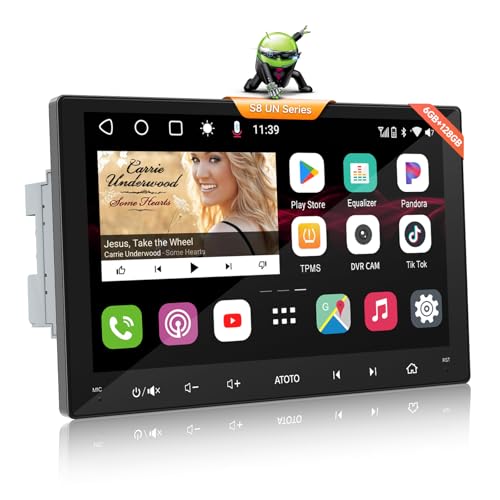
Power Output | 29W RMS x 4, 49W max x 4, rated down to 2 ohms |
Preamp Voltage | 4V RCA |
Screen | 9 inch QLED, 1280 x 720, 600 cd/m2, 5-touch capacitive |
Audio EQ | 9 preset EQ modes with a 32-band DSP, 16 front and 16 rear |
Navigation | App-based through Google Maps, Waze or downloaded offline maps, with built-in 4G LTE |
Dimensions | Double-DIN chassis with an integrated 9 inch panel. Full dimensions not published |
The ATOTO S8 Ultra S8G2099UN represents a significant step up from the standard S8, though not in the way the panel spec suggests. Both units use QLED, so the real gap is size and output. This one carries a 9 inch 1280 x 720 screen rated at 600 cd/m2 with a 5-touch capacitive surface, and the extra area is what you notice on a map at a glance.
The audio platform is also elevated, and here the difference is measurable. ATOTO publishes 4V RCA outputs on the S8 Ultra where the standard S8 gets a 0.8V sub out only, and the built-in amplifier steps up to 29W RMS x 4 with a 49W maximum, rated down to 2 ohms. The DSP carries nine presets and 32 adjustable bands split evenly front and rear, with time alignment and crossover control. For budget-conscious audiophiles, that pre-out voltage is the standout feature, not the screen.
Navigation continues to rely on Android-based apps, with a built-in 4G LTE modem so the maps can run online without your phone. This provides versatility because you can choose the apps you trust, but it does not match the seamless updates or interface consistency of built-in Garmin or HERE systems. Users must manage updates and settings themselves. The wireless connectivity is convenient and mostly reliable, though owners report occasional connection drops compared to premium competitors.
From a usability standpoint, the system boots quickly and includes voice control for hands-free operation. However, the interface design is not as polished as high-end ones. Icons and menus look more utilitarian, and transitions may feel less refined. This does not stop it from functioning well, but it reinforces that this is a mid-range product.
Build quality is adequate but does not inspire the same confidence as premium head units. The materials are lighter, and while the system works well, long-term durability may not be on par with established stereo brands. ATOTO publishes a 12-month warranty with an extra 180 days available on registration, which is shorter than the two years Kenwood gives. After-sales support is also limited, so users may find fewer resources if issues arise.
When you consider everything, the ATOTO S8 Ultra delivers exceptional value for drivers who want the biggest installed screen here and a genuine 4V output path without paying top-tier prices. It requires a bit more effort in setup and upkeep, but the performance it offers is hard to match at this price.
6. Best Phone-Free Navigation: BOSS Elite BV960NV GPS Car Stereo
The BV960NV earns Best Phone-Free Navigation because it is the only pick here with no CarPlay and no Android Auto at all, and it does not need them. Maps ship preloaded on an installed 8GB microSD card with lane guidance and spoken street names.
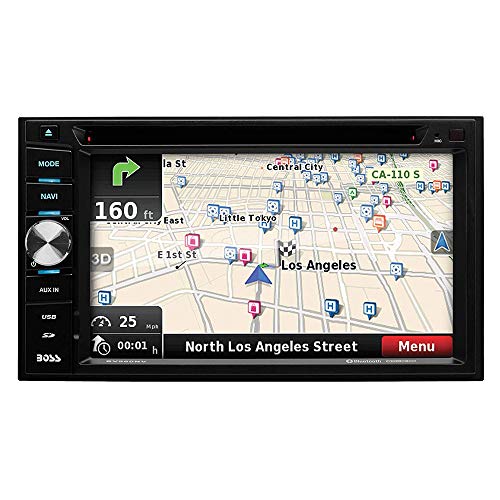
Power Output | 20W RMS x 4, 80W peak x 4 |
Preamp Voltage | 2V, three pairs, six channels |
Screen | 6.2 inch touchscreen, 800 x 480 |
Audio EQ | 10-band graphic EQ with 8 presets |
Navigation | Preloaded maps of the United States except Hawaii, plus Puerto Rico, on an installed 8GB microSD card. Map engine not published |
Dimensions | 7.125 x 4.125 x 6.875 inches (WxHxD) |
The BOSS Elite BV960NV fills a very specific role, because it provides affordable GPS navigation for drivers who do not want to rely on smartphones at all. BOSS ships it with an 8GB microSD map card already installed, covering the United States except Hawaii plus Puerto Rico, with millions of points of interest, lane guidance, junction views and text-to-speech that announces actual street names rather than generic turn prompts. The mapping engine itself is not published by BOSS, so we are naming what the coverage does rather than which software draws it. For drivers who travel in rural areas without reliable cell coverage, this is a major advantage.
The display is only 6.2 inches and its resolution is modest at 800 x 480. Text and icons are readable but not crisp, especially compared to the brighter and sharper panels on ATOTO or premium models. For casual navigation, it works, but users who value high-quality visuals may find it limiting.
Audio performance is equally modest. With only 2V pre-outs across three pairs and a 10-band graphic EQ with eight presets, it is not built for heavy customization or high-powered aftermarket systems. For factory speaker setups, however, it delivers acceptable quality, and the 20W RMS x 4 internal amplifier is enough for stock speakers. Bluetooth streaming works reliably for calls and music, though audio detail does not hold up next to the 4V and 5V units above.
The BV960NV’s strengths lie in its simplicity, and one common assumption about it needs correcting. This is not a compact chassis. At 6.875 inches deep it is the deepest unit in this roundup, more than an inch deeper than the Alpine, so check your dash cavity before ordering. What is straightforward is the interface, which is easy to understand even for beginners. Support for backup cameras and media playback via DVD, CD, SD or USB adds useful functionality.
Its weaknesses are also clear. There is no CarPlay and no Android Auto, so smartphone integration stops at Bluetooth audio and calls. Build quality feels budget-oriented, and while it is serviceable, it may not hold up as long as Alpine or Kenwood alternatives. The system also lacks advanced features like split-screen multitasking or detailed audio tuning.
However, this head unit makes sense for budget-focused drivers who simply want dependable offline GPS navigation without a phone in the loop. It will not impress with visuals or audio, but it delivers essential functionality at a price point many will find accessible.
7. Best Factory-Fit for Corolla: SYGAV 2 DIN Android GPS Head Unit
The SYGAV earns Best Factory-Fit for Corolla because it is built to the Corolla dash opening rather than to a universal double-DIN, so it goes in without a trim kit and looks stock when it is done. No other pick here solves that particular problem.

Power Output | 24W RMS x 4, 50W peak x 4, per the retail listing |
Preamp Voltage | Not published |
Screen | IPS, 1280 x 720. Screen size not published by SYGAV |
Audio EQ | 15-band with DSP tuning, per the retail listing |
Navigation | App-based through Google Maps, Waze or downloaded offline maps |
Dimensions | Factory-fit design for Toyota Corolla dashboards |
The SYGAV double DIN Android GPS Head Unit is specifically designed for Toyota Corolla owners who want an upgrade that looks and feels factory-installed. Its IPS screen provides generous screen real estate with bright, wide-angle visibility, making it easy to manage maps and apps without squinting. One caveat we have to be straight about, because it shapes everything below. SYGAV does not publish a model number or a specification sheet for this unit, so every figure in the block above rests on the retail listing alone rather than on a manufacturer page we can check it against.
The fact that it blends into Corolla dashboards without additional trim kits is a big advantage for owners who want a clean, OEM-style appearance.
As with other Android-based units, navigation is powered by apps. Google Maps, Waze, and offline map downloads can all be installed, giving drivers flexibility in how they manage navigation. The upside is choice, and the downside is the need for regular updates and app maintenance. Wireless CarPlay and Android Auto connectivity adds modern convenience, allowing you to connect your smartphone without extra cables.
Audio features are respectable for a mid-range unit. The listing describes a 15-band EQ with DSP, which gives you more control over tuning than entry-level stereos, though no pre-out voltage is published anywhere we could find. It will not match the precision of Kenwood’s or Pioneer’s high-end models, but it is more than enough for most everyday drivers who want better-than-stock sound.
It is not without limitations. It is only compatible with Toyota Corolla models, which rules out most vehicles. The interface is serviceable but lacks the polish and fluidity of premium competitors. Installation can be more complex than standard double-DIN units, sometimes requiring professional setup to handle wiring harnesses and software settings.
Build quality is decent, though not in the same league as Alpine or Kenwood. Owners report minor software quirks or lag, particularly when juggling multiple apps. However, for most Corolla owners, the SYGAV delivers a reliable, feature-rich upgrade that integrates neatly with their car.
In summary, this head unit is a strong option for Toyota Corolla drivers who want a factory-fit infotainment system with GPS, audio tuning, and smartphone integration. It is not perfect, and the thin published specification is a real drawback, but it combines practicality with strong features at a reasonable price point.
Top 3 Affordable GPS Car Stereos (Budget Picks)
If you are looking for navigation and connectivity without spending on mid-range or premium units, these budget-friendly stereos cover the essentials. They may not have every advanced feature, but they bring GPS functionality, smartphone integration, and everyday practicality at prices most drivers can justify. These three split into a universal all-rounder, a vehicle-specific OEM replacement, and a portable screen that needs no install at all.
8. Best Budget All-Rounder: ATOTO A6PF Double-DIN Car Stereo
The A6PF earns Best Budget All-Rounder because it gives you wireless CarPlay, a 36-band EQ and a deliberately short chassis at a price where most units pick one of the three. Nothing about it is class-leading, and nothing about it is missing either.
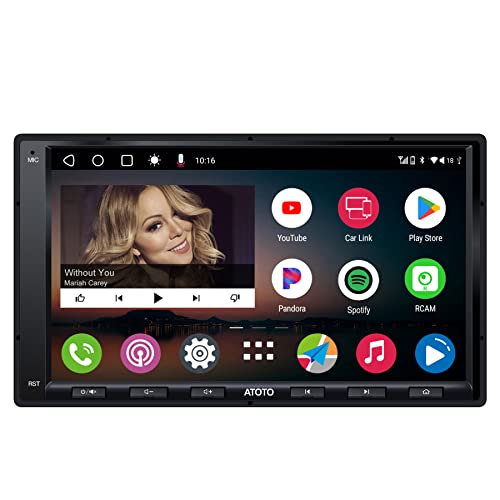
Power Output | 24W RMS x 4, 45W max x 4 |
Preamp Voltage | Not published |
Screen | 7 inch IPS, 1024 x 600, 600 cd/m2, 178 degree viewing angle |
Audio EQ | 9 preset EQ modes with a 36-band EQ in the DSP, plus time alignment |
Navigation | App-based through Google Maps, Waze or downloaded offline maps |
Dimensions | 7 x 4 x 6 inches (WxHxD), with a shorter than standard chassis depth |
The ATOTO A6PF strikes an impressive balance for a budget GPS stereo, which offers functionality that edges close to mid-range territory. Its 7 inch IPS screen is responsive and bright at 600 cd/m2, with a 178 degree viewing angle that keeps maps and menus legible even in direct sunlight. Having wireless CarPlay and Android Auto at this price point is noteworthy, because it puts a familiar smartphone-like interface into reach for budget-focused drivers.
On the audio side, the A6PF delivers features that are unusual in its price range. ATOTO publishes nine preset EQ modes with a 36-band EQ inside the DSP, along with time alignment and speed compensated volume, which lets you adjust sound well beyond simple presets. What we could not verify is pre-out voltage, because ATOTO does not publish a figure for this model and the retail listings do not carry one either. If an external amplifier is the plan, treat that as an open question rather than an assumption.
Navigation is flexible but requires some responsibility from the user. Instead of preloaded proprietary maps, the unit relies on Android-compatible apps. This allows you to choose Google Maps, Waze, or other offline-capable systems. The upside is versatility, but the downside is the need to download and update apps yourself. For rural drivers or those who frequently lose cell coverage, pre-downloaded offline maps make the system practical.
Connectivity is strong, with dual Bluetooth support, WiFi and USB tethering, and external storage up to 2TB. This makes the unit versatile for drivers who juggle multiple devices or want to store music and videos locally. Camera input support adds practical safety functionality at no extra cost. One detail worth knowing before you order is that ATOTO builds this chassis shorter than the conventional depth, which leaves more room behind the unit for harnesses and adapters in a shallow cavity.
Where the A6PF shows its price is in interface polish and build quality. Menus are utilitarian rather than sleek, and multitasking can sometimes introduce lag, especially when running resource-heavy apps. The unit also feels lighter in hand than premium competitors, which raises questions about long-term durability.
Overall, the A6PF is one of the best GPS car stereos in the budget class. It is not flawless, but for drivers who want navigation, smartphone integration, and audio flexibility without overspending, it is our go-to pick for low-budget buyers and it delivers more than expected.
9. Best OEM-Style GPS: Eonon GMX7 Android 14 Car Stereo
The GMX7 earns Best OEM-Style GPS because it is a direct-replacement unit for Chevrolet and GMC dashes that keeps steering wheel controls, factory cameras and CANBUS features intact. You are not adding a screen to a car, you are replacing what the factory fitted.
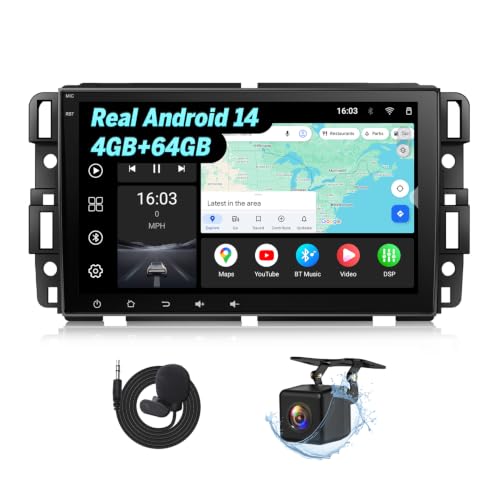
Power Output | 45W max x 4 per Eonon’s listing. RMS figure not published |
Fitment | Direct replacement for specific Chevrolet and GMC models. Not a universal double-DIN |
Screen | 8 inch IPS, 1280 x 720 |
Audio EQ | 36-band EQ with DSP, per the retail listing |
Navigation | App-based through Google Maps, Waze or downloaded offline maps, on Android 14 |
Dimensions | Not published. Varies by vehicle fascia |
The Eonon GMX7 is a budget-friendly Android stereo that puts its focus on OEM integration and software versatility. Its 8-inch IPS screen offers wide viewing angles and crisp 1280 x 720 visibility, making maps, menus, and media easy to read even in sunlight. The most important thing to know before anything else is that this is not a universal double-DIN unit. Eonon sells the GMX7 as a direct replacement built around specific Chevrolet and GMC fascias, covering models such as the Silverado, Tahoe, Yukon, Sierra, Acadia, Traverse and Express. If you do not drive one of those, this pick is not for you.
Running on Android 14 with 3GB of RAM and 32GB of storage, the GMX7 provides a current system with access to the Google Play Store, so drivers can install navigation, media, and customization apps freely. Firmware updates can be applied online without a USB stick, which simplifies maintenance.
Wireless and wired CarPlay and Android Auto are both standard at this price point, and on an 8-inch panel they look and feel more premium than expected. For GPS, the unit supports both online and offline Android apps, which means you can use Google Maps, Waze, or download maps for coverage in rural areas. The give and take is that you will need to manage those apps and updates yourself.
On the audio side, the GMX7 impresses for its tier, with one caveat. The retail listing describes a 36-band EQ with DSP, which offers much deeper tuning flexibility than most budget competitors, and Eonon publishes a 45W maximum per channel. Neither an RMS rating nor a pre-out voltage appears on any Eonon material we could find, so amplifier planning here involves some guesswork.
Practical touches like multiple camera inputs, OBD2 support and built-in WiFi make the system versatile for daily use. Its CANBUS support allows it to retain OEM features like steering wheel controls, Bose audio, OnStar, and factory cameras, which makes it a strong OEM-style upgrade and is exactly why the tag fits.
The design does have some limitations too. The narrow vehicle compatibility is the big one, and the interface is not as polished or fast as premium brands, while the lighter build raises some durability concerns. Long-term reliability and support may not match established names.
All things considered, the GMX7 stands out in the budget class for one specific owner. Its bright IPS display, modern Android platform, deep EQ tuning, and CANBUS integration give it a high-tech feel without a high price, provided you drive a Chevrolet or GMC it was built for. For drivers willing to handle occasional app management, it delivers excellent value as an OEM replacement.
10. Best Plug & Play: IIWEY Portable Apple CarPlay Car Stereo
The IIWEY earns Best Plug & Play because it is the only pick here that needs no dash disassembly at all, and the only one that moves between cars in a minute. It is an add-on screen rather than a head unit, and that is the whole point.
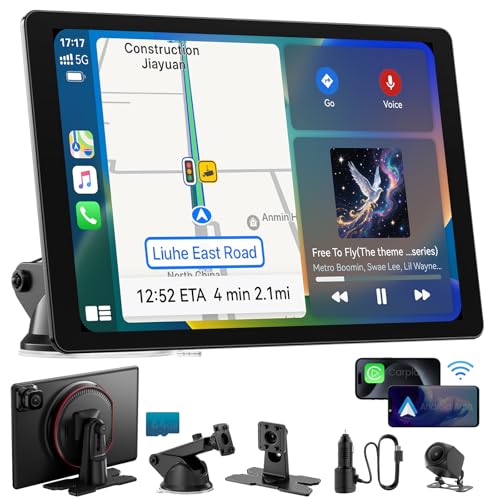
Power Output | None. Audio passes to the car through FM, AUX or the internal speaker |
Preamp Voltage | None. No RCA outputs |
Screen | 11 inch, 1280 x 800 |
Audio EQ | None |
Navigation | Phone-based through CarPlay or Android Auto. No built-in GPS |
Dimensions | 11 x 6.5 inches. Depth not published |
The IIWEY Portable CarPlay Stereo takes a different approach than most aftermarket head units by acting as an add-on rather than a replacement. This makes it ideal for leased vehicles, temporary use, or drivers who want modern features without taking apart their dashboards. Setup is straightforward, because you mount the 11-inch display, power it through the 12V outlet, and pair your phone wirelessly through CarPlay or Android Auto.
The large display makes navigation apps and media much easier to interact with. CarPlay and Android Auto integrate smoothly, offering familiar controls for maps, calls, and music. Extra inclusions like dash cam and backup camera support enhance safety and add value to what is already one of the most affordable ways to modernize your car’s infotainment system.
The limitations, however, are clear. Audio quality is the biggest compromise, as the system transmits sound via FM, AUX, or the small internal speaker. There is no internal amplifier, no EQ and no pre-out of any kind, so this setup cannot match a dedicated aftermarket head unit. The screen, while large, can reflect glare in direct sunlight, and placement needs to be carefully considered to avoid blocking sightlines or vents.
Because the IIWEY relies on your smartphone for GPS, there is no built-in navigation. That means you are dependent on mobile apps and connectivity, though offline maps can be downloaded if you plan ahead. Advanced audio tuning is not available, so this is not a system for audiophiles.
However, what the IIWEY offers is convenience. It is portable between cars, does not require specialized installation, and delivers modern navigation and smartphone features instantly. For drivers who want the best car stereo with GPS capabilities at the lowest entry cost, it is a compelling option that makes sense in the right use case.
Fitment: Which Install Format Each Pick Needs
The ten picks here do not install the same way, and that catches people out more often than any spec does. There are three formats in this roundup and they ask very different things of you.
Universal double-DIN. The Pioneer, Kenwood, Alpine, both ATOTO S8 models, the BOSS and the ATOTO A6PF all drop into a standard double-DIN opening with the right dash kit and harness. What varies is depth, and depth is what kills installs. The Alpine needs 5.6 inches, the Kenwood 6.3, the Pioneer 6.5 and the BOSS 6.875. Measure the cavity behind your dash before you order anything, because a unit that is half an inch too long is a unit you are sending back.
Vehicle-specific replacement. The SYGAV is built for the Toyota Corolla dash and the Eonon GMX7 for specific Chevrolet and GMC models. Neither needs a trim kit because the fascia is the trim kit, which is why they look factory when finished. The catch is obvious, because if your car is not on the compatibility list, nothing about the unit helps you.
Portable add-on. The IIWEY installs nowhere. It mounts to the dash or windscreen, powers from the 12V socket, and sends audio to your existing stereo over FM or AUX. Nothing comes apart, and nothing is permanent, which suits leased cars and older vehicles where a double-DIN opening does not exist.
Always confirm double-DIN or single-DIN sizing before purchasing to avoid installation headaches.
Factors to Consider When Choosing the Best GPS Car Stereo
Selecting the best aftermarket GPS car stereo goes beyond just picking the unit with the biggest screen or lowest price. A head unit is the hub of your in-car experience, and the right choice depends on how you drive, what features you value, and what compromises you are willing to make. Based on the specifications we verified and the owner reports we read, here are the key factors we suggest weighing before making your decision.
1. Match the Screen Size to Your Dash
Decide how much screen you can actually live with before you look at panels. Larger displays of 9 to 11 inches make maps easier to read and touch controls more comfortable, but they can block vents or buttons in some dashboards. Smaller units of 6 to 7 inches fit more easily into factory openings and still offer clear visibility if the screen quality is good. IPS and QLED panels are worth looking for because they provide better brightness and viewing angles in bright daylight, and published brightness figures like the 600 cd/m2 on the ATOTO units tell you more than the screen size does.
2. Decide Where Your Maps Come From
Work out whether you want maps that live in the unit or maps that live on your phone. Premium brands like Pioneer and Kenwood come with HERE or Garmin maps preloaded, offering reliable offline navigation with minimal setup, though Kenwood includes three years of updates rather than lifetime ones. Mid-range and budget Android models rely on apps, which provide flexibility but require you to manage updates and downloads. If you drive in areas with poor reception, offline map capability is essential.
3. Check How Your Phone Connects
Confirm the connection type before you assume it is wireless. Wireless Apple CarPlay and Android Auto have become must-have features, allowing you to use familiar navigation and media apps right from your phone. Some units here are wired only, like the Alpine, and one has neither, like the BOSS. If you want seamless voice control, messaging, and streaming, make sure your unit includes full CarPlay and Android Auto support in the form you expect.
4. Set Your Audio Ceiling Before You Buy
Decide now whether an amplifier is in your future, because pre-outs are the hardest thing to add later. Preamp voltage determines signal strength, where 2V is basic and 4V or higher provides a cleaner feed to amplifiers. This is also where published specs matter most, because the ATOTO S8 in this roundup carries only a 0.8V subwoofer output rather than the full 4V set many listings imply. Equalizer options also matter, ranging from a 10-band graphic EQ on the BOSS to 32 and 36-band DSPs on the ATOTO units. If you plan to upgrade speakers or add a subwoofer, choose a unit with strong audio customization tools and a pre-out path you have verified.
5. Count the Inputs You Will Actually Use
List the accessories you want connected before you compare units. Features like dual Bluetooth, WiFi tethering, multiple USB ports, and SD card slots expand a stereo’s usefulness. Camera inputs are also important for safety, and support varies widely here, from a single backup camera on budget units to four inputs on the Kenwood. If you want a system that can grow with your needs, choose one with flexible expansion options.
6. Confirm the Fit Before You Order
Measure your dash cavity and check your vehicle against the compatibility list. Factory-fit units, like those from SYGAV and Eonon, integrate cleanly into specific vehicle dashboards but fit nothing else. Universal double-DIN units fit widely but vary in depth from 5.6 to 6.875 inches across this roundup. Portable models, such as the IIWEY, need almost no installation but compromise on audio depth. Always confirm double-DIN or single-DIN sizing before purchasing to avoid installation headaches.
7. Weigh Build Quality Against Support
Compare warranty terms alongside the features list, because they tell you what the brand expects to go wrong. Premium models from Alpine, Kenwood, or Pioneer are known for durability and strong after-sales support, and Kenwood publishes two years on parts and labour. Budget brands can deliver surprising features but may cut corners on materials, and ATOTO covers its units for 12 months with an extra 180 days on registration. Warranty terms and customer support availability should factor into your decision just as much as the specification list.
8. Spend Where You Will Notice It
Put your money into the two or three things you use daily rather than the longest feature list. It is easy to get caught up in flashy specs, but the best value comes from matching features to your needs. A budget stereo with wireless CarPlay may be more practical than a premium unit with tools you will never use. On the other hand, if audio tuning and offline GPS are priorities, it may be worth stretching your budget.
In short, the best car stereo with GPS is the one that balances navigation reliability, smartphone convenience, and audio performance for your driving style. Before committing, think about where you drive most, how you use your phone in the car, and whether you want to upgrade your sound system. A careful match will save you frustration and make your daily drives smarter and more enjoyable.
FAQs
Here are answers to the questions we hear most often about GPS car stereos, to help you make a more confident choice.
Do I really need built-in GPS if I already use CarPlay or Android Auto?
Not necessarily. CarPlay and Android Auto provide excellent navigation options, but they rely on your smartphone’s connection. If you often drive through areas with poor reception, a built-in GPS unit with offline maps can be a lifesaver, and the Pioneer, Kenwood, Alpine and BOSS picks here all hold maps onboard.
What is the difference between single-DIN and double-DIN head units?
Single-DIN stereos are smaller at about 2 inches tall and fit older or compact dashboards, while double-DIN units are twice as tall, offering larger touchscreens and more features. We always recommend checking your vehicle’s compatibility before buying.
Can you get a single-DIN head unit with built-in navigation?
Yes, but the choice is narrow and shrinking. Most single-DIN navigation units either use a motorized flip-out screen or pair a small display with phone projection, and every pick in this roundup is double-DIN or portable instead. If your dash only takes a single-DIN opening, a portable screen like the IIWEY is often the more practical route to modern navigation, because it sidesteps the opening entirely.
Are budget GPS stereos reliable for long-term use?
Budget models can be reliable, but they often use lighter materials and simpler software, so they may not last as long as premium options. The warranty terms tell the same story, because Kenwood publishes two years while ATOTO publishes 12 months with 180 extra days on registration. Premium brands like Kenwood, Alpine, or Pioneer remain safer bets if longevity and support matter most.
How important is preamp voltage for sound quality?
Preamp voltage determines how strong the audio signal is before it reaches your amplifier, and a higher voltage like 4V or 5V means less noise and distortion when you add external amps. It is worth prioritizing, and it is worth verifying, because published voltages in this segment are inconsistent and some units carry a subwoofer output only.
Can I install a GPS car stereo myself?
Many double-DIN units are designed for DIY installation if you are comfortable with wiring and dash disassembly. However, factory-fit models and advanced systems may require professional installation, particularly if you want to integrate steering wheel controls or multiple cameras. Owners report plenty of successful DIY jobs, though professional installs reduce risk.
Do all GPS stereos support backup cameras?
Most modern GPS stereos include at least one camera input, but support for multiple cameras varies. Premium models often allow front, rear, and side cameras, and the Kenwood here takes four inputs, while budget units may only support a single backup camera.
How often do I need to update GPS maps?
If your system uses built-in maps, updates every 6 to 12 months are recommended to keep routes accurate, and with app-based systems updates happen automatically through the app store. Check what the update actually costs before you buy, because Kenwood includes three years of Garmin updates rather than lifetime ones. We always suggest keeping maps fresh because it makes a real difference for new roads, points of interest, and traffic changes.
Verdict: The Model Worth Buying
If you want the best car stereo with GPS without qualifications, the Pioneer AVIC-W8600NEX is the one we would buy. After working through premium, mid-range, and budget options, here are our final recommendations if you are still deciding.
In the end, the right choice depends on how you prioritize display quality, navigation reliability, and audio performance. We suggest matching your pick to your driving style and budget, then checking specs carefully before you buy.
If you would like to explore more car audio gear, check out our other guides:
- Best Floating Screen Car Stereos of 2026 – Reviews and Buying Guide
- Best Car Stereos with Backup Camera In 2026 – Top Models Reviewed
- 10 Best Kenwood Car Stereos of 2026 – Reviews and Buyer’s Guide
- Best Pioneer Car Stereos in 2026 – Top Picks and Reviews
- 6 Best Alpine Head Units in 2026 (Expert Reviews and Buying Guide)
- 6 Best JVC Car Stereos for 2026 – Expert Reviews and Buying Guide