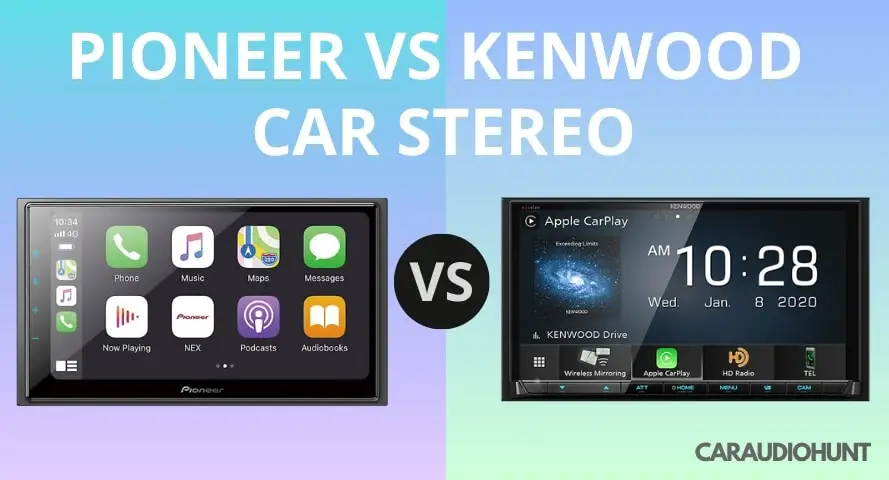
Choosing between Pioneer and Kenwood car stereos isn’t just about picking a brand, it’s about matching sound identity with your driving personality. After years of comparing these two powerhouses side by side, I can tell you that while Pioneer excels in bass punch and wireless performance, Kenwood offers clarity, precision, and craftsmanship.
In this guide I break down everything that truly matters in a car stereo from each brand’s legacy and sound signature to real-world usability, connectivity, and installation ease. You will see how they differ in sound tuning, build quality, and app responsiveness, and where each one delivers in feature depth, navigation, and Hi-Res support. I have also included model-vs-model matchups so you can instantly tell whether a Pioneer DMH-W4660NEX outperforms a Kenwood Excelon DMX907S, or if the Kenwood DDX9907XR still earns its premium badge.
By the end of this comparison you will know exactly which stereo fits your needs, whether you want bold bass and smooth wireless integration like I do, or you lean toward Kenwood’s studio-grade realism and superior tuning control.
Let’s get straight into the Pioneer vs Kenwood car stereo comparison and find out which one truly deserves a place on your dashboard in 2026.
In This Article
- Brand Overview - Pioneer and Kenwood Stereo
- Pioneer vs Kenwood: Head-to-Head Quick Comparison
- Comparing Pioneer vs Kenwood Stereo Receivers by Features
- Product Matchups: Pioneer vs Kenwood Car Stereo Models
- FAQs
- Which is better for bass: Pioneer or Kenwood?
- Do both Pioneer and Kenwood support Apple CarPlay and Android Auto?
- Pioneer or Kenwood, which is more durable in the long run?
- Are Pioneer car stereos easier to install than Kenwood units?
- Which brand, Pioneer or Kenwood, offers better value for budget buyers?
- Pioneer or Kenwood, which one makes better navigation stereos?
- Which has more premium options, Pioneer or Kenwood?
- Final Wrap-Up - Which Brand To Choose?
Brand Overview - Pioneer and Kenwood Stereo
Before going into features and specs, it’s worth knowing what defines each brand. Pioneer and Kenwood have shaped modern car audio through decades of innovation, yet their design focus and sound philosophy cater to different listeners. Here’s how they stand out in today’s car stereo market.
Pioneer at a Glance
Pioneer has earned its reputation as a leading car stereo and multimedia receiver brand known for bold sound, intuitive design, and strong wireless performance. From compact single DIN head units to fully loaded double DIN receivers, Pioneer delivers impressive audio clarity and smooth control interfaces that appeal to both beginners and enthusiasts.
Pioneer's Good Sides
Pioneer's Drawbacks
Kenwood at a Glance
Kenwood, particularly through its Excelon series, stands out for precision, durability, and audiophile-grade performance. Its car receivers emphasize balanced sound, detailed mids, and top-tier tuning flexibility, making it a favorite among users who value clean, accurate playback.
Kenwood's Good Sides
Kenwood's Drawbacks
Pioneer vs Kenwood: Head-to-Head Quick Comparison
If you want a quick overview, I’ve put together this comparison chart that lays out the main differences at a glance. You can use it as a starting point to decide which head unit better fits your setup and listening style.
Feature | Pioneer | Kenwood |
|---|---|---|
Sound Quality | Bass-rich, dynamic | Balanced, natural mids |
Connectivity | Excellent wireless CarPlay and Android Auto | Strong wired and wireless options |
Build Quality | Lightweight | Premium, sturdy |
Price Range | Mid to High | Mid to High |
Ideal User | Bass lovers and casual listeners | Audiophiles and clarity seekers |
Comparing Pioneer vs Kenwood Stereo Receivers by Features
Let’s take a deeper look at how each car stereo brand performs in real-world use. From my experience, this section highlights the most important factors that shape your overall experience with a head unit or multimedia receiver.
Audio Quality
Pioneer car stereos usually emphasize a bass-forward sound with crisp highs and lively EQ tuning. That makes them great for hip-hop, EDM, or any genre that relies on strong low-end energy. The subwoofer controls are easy to adjust, which appeals to bass-focused drivers and SPL enthusiasts.
Kenwood receivers, on the other hand, deliver more natural, balanced, and true-to-life audio. The mids stand out clearly, which makes them ideal for rock, acoustic, and podcast listening. The Kenwood Excelon series, in particular, performs best when paired with quality speakers.
Verdict: Choose Pioneer if you want bold, bass-driven sound. Go with Kenwood if you prefer accurate, realistic tone and midrange clarity.
Features and Connectivity
A modern car stereo head unit is no longer just about playing music. It’s the command center for your drive. Here’s how both brands handle smartphone integration, Bluetooth performance, and expandability.
Both Pioneer and Kenwood support Apple CarPlay and Android Auto, but Pioneer’s lineup offers wireless capability across more models. I have also found Pioneer receivers to pair faster over Bluetooth and run smoother with app integrations.
Kenwood keeps up with excellent support for FLAC playback, DSP controls, and wired or wireless CarPlay. If you like to fine-tune your system, Kenwood gives you more flexibility.
Verdict: Pioneer wins for wireless convenience and faster app response. Kenwood stands out for deep tuning control and Hi-Res audio handling.
Build Quality and Design
The feel of a car stereo receiver can influence how much you enjoy using it daily. Kenwood models tend to have a premium, solid feel with firm buttons and sharp, colorful displays. The Kenwood DDX9907XR, for example, looks almost like a built-in OEM system from a luxury car.
Pioneer units are often lighter but still hold up well over time. Their touchscreens remain responsive and consistent even in harsh conditions.
Verdict: Kenwood leads in physical durability and screen quality, while Pioneer maintains excellent display reliability and touch accuracy.
Ease of Use and Installation
If you plan to install the car stereo yourself, Pioneer makes life easier. Its interfaces are straightforward and quick to navigate, which is perfect for first-time users.
Kenwood systems have more advanced menus that require a bit of learning but reward you with greater control once mastered.
Verdict: Pioneer is more beginner-friendly. Kenwood suits advanced users who want precision control over audio settings.
Pricing and Value for Money
Both Pioneer and Kenwood car stereos fall in the mid-to-high-end price range. Pioneer tends to offer wireless features and strong performance even in lower tiers, while Kenwood packs its premium receivers with high-grade DACs and advanced tuning options.
Verdict: Pioneer offers better value for mid-range buyers, while Kenwood gives more refinement and premium sound at the higher end.
Product Matchups: Pioneer vs Kenwood Car Stereo Models
Choosing the right car stereo or head unit often comes down to model-to-model comparisons. In this section, I’ve handpicked direct competitors from both brands so you can see exactly how each receiver performs in design, features, and sound quality. Whether you prefer compact single-DIN setups or large touchscreen double-DIN systems, these comparisons will help you pick the model that fits your needs best.
1. Pioneer and Kenwood Single DIN Digital Media Receivers Comparison
Feature | Pioneer MVH-S322BT | Kenwood KMM-BT732HD |
|---|---|---|
Image |
|
|
Bluetooth Support | Yes | Yes |
Radio Reception | Standard | HD Radio |
File Support | MP3, WMA, FLAC | MP3, WMA, FLAC, AAC |
Display Customization | Multi-color | Variable illumination |
Verdict | Great Bluetooth and smooth UI | Better radio quality and broader audio support |
Price |


2. Pioneer and Kenwood Single DIN CD Receivers Comparison
Feature | Pioneer DEH-S4220BT | Kenwood KDC-X305 |
|---|---|---|
Image |
|
|
CD Player | Yes | Yes |
Smart Features | Smart Sync App, Alexa via App | Alexa Ready, Music Mix, Dual BT |
Audio Tuning | 13-Band EQ, 4V Preouts | 13-Band EQ, DTA, 3×5V Preouts |
USB Ports | Front USB & AUX | Front USB & AUX |
Verdict | Smart control and app-driven features | Cleaner, tunable sound with 5V outputs |
Price |


3. Pioneer and Kenwood Double DIN Mechless Receivers Comparison
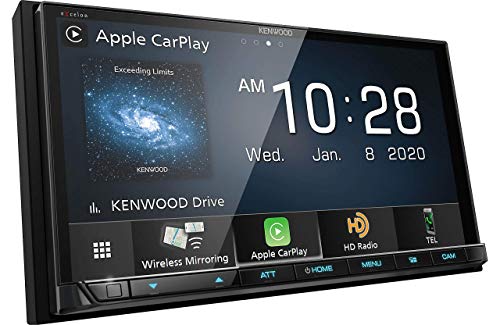
Feature | Pioneer DMH-W4660NEX | Kenwood Excelon DMX907S |
|---|---|---|
Image |
|
|
CarPlay/Android Auto | Wireless | Wired and Wireless |
Display Type | Resistive Touchscreen | Capacitive Touchscreen |
Audio Tuning | Standard EQ | DSP with time alignment |
Camera Support | Dual | Dual |
Verdict | Best for wireless connectivity and UI | Better sound flexibility and tuning depth |
Price |

Feature | Pioneer AVIC-W8600NEX | Kenwood DNX997XR |
|---|---|---|
Image |
|
|
Navigation | Built-in, dual-zone | Garmin Navigation |
Offline Maps | Yes | Yes |
CarPlay/Android Auto | Yes, wireless | Yes, wireless |
Screen Type | Capacitive Touchscreen | High-Resolution Capacitive |
Verdict | Best for UI and media integration | Superior GPS mapping and offline navigation |
Price |


FAQs
Which is better for bass: Pioneer or Kenwood?
From my experience comparing multiple setups, Pioneer generally wins here. Its car stereo tuning leans more bass-forward and pairs extremely well with subwoofers. If you enjoy genres like hip-hop or EDM, Pioneer receivers deliver a deeper low-end punch. Kenwood focuses on balanced sound, which may feel lighter on bass but cleaner in overall tonal balance.
Do both Pioneer and Kenwood support Apple CarPlay and Android Auto?
Yes, both brands do. However, I’ve noticed Pioneer head units offer wireless CarPlay and Android Auto more consistently across mid-range models. If you value cable-free connectivity and smooth app control, Pioneer is often the more convenient choice.
Pioneer or Kenwood, which is more durable in the long run?
Kenwood typically holds the edge in physical durability. Its Excelon car stereo receivers use premium components and solid construction. That said, I’ve found Pioneer to be impressively reliable too, especially in software stability and screen longevity over years of use.
Are Pioneer car stereos easier to install than Kenwood units?
Yes, in most cases. I find Pioneer head units much simpler to wire and configure thanks to their intuitive layout and broader vehicle compatibility. They’re ideal for DIY installers or anyone setting up a receiver for the first time.
Which brand, Pioneer or Kenwood, offers better value for budget buyers?
Pioneer usually offers more value at lower price points. Even entry-level Pioneer car stereos come with Bluetooth, hands-free calling, and app support. Kenwood starts to shine in the higher ranges with refined sound tuning and better DAC performance.
Kenwood takes the lead here. Its DNX-series navigation receivers use Garmin-powered mapping, and I’ve always appreciated their accuracy and offline reliability. If built-in GPS and advanced route guidance matter to you, Kenwood is the stronger pick.
Kenwood, especially through its Excelon head units, offers a wider selection of high-end receivers made for audiophiles and advanced system tuners. Pioneer also competes well, but Kenwood dominates the premium category with better materials and professional-grade tuning tools.
Final Wrap-Up - Which Brand To Choose?
There isn’t a single winner in the Pioneer vs Kenwood car stereo debate. It really depends on what you expect from your head unit or receiver and how you like your music to sound while driving.
From my experience, I think that Pioneer feels more energetic. It gives that instant punch, clear highs, and simple usability that most drivers appreciate. If you want your music to hit hard and your system to feel effortless, Pioneer delivers.
Kenwood, on the other hand, feels more refined and focused. Its sound is cleaner and more accurate, and the build quality shows real attention to detail. If you’re the type who enjoys balanced tones, precision tuning, and a premium interface, Kenwood will probably win you over.
If I had to choose, I’d say Pioneer is for those who love excitement, while Kenwood is for those who value precision. Both are excellent, and your choice should reflect how you want your music to sound every day.
Want to explore more?
Check out my other comparison guides like Pioneer vs Alpine, Kenwood vs Alpine, and Pioneer vs Boss to help you find your perfect match.