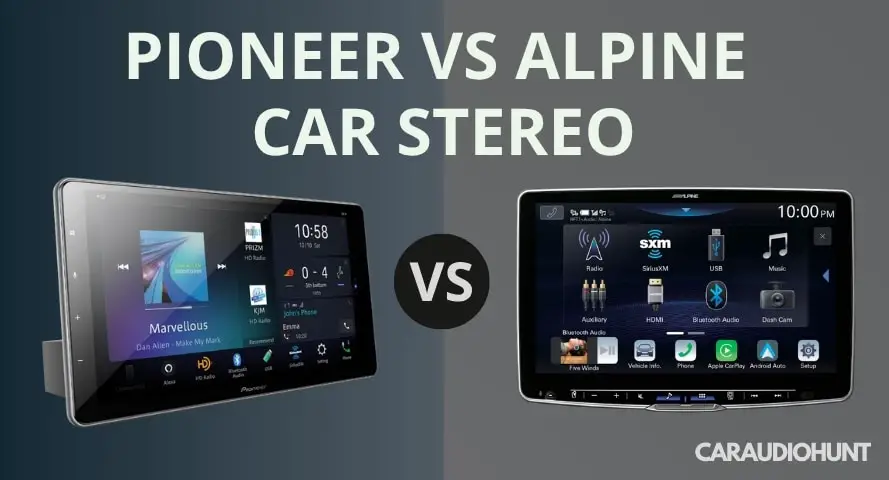
When I first compared Pioneer and Alpine car stereo, it wasn’t just about brand loyalty; it was about how each one feels behind the wheel. Both deliver top-tier performance, but they do it in completely different ways. Pioneer gives me that instant satisfaction of punchy bass, fast wireless CarPlay, and a user-friendly interface that’s hard to beat for the price. Alpine, on the other hand, earns my respect with its cleaner soundstage, elegant Halo displays, and that unmistakable studio-quality tuning that audiophiles love.
In this Pioneer vs Alpine Car Stereo comparison, I’ve gone beyond surface-level specs to explore how each brand performs where it truly matters: sound depth, connectivity reliability, build precision, installation practicality, and long-term value.
You’ll see how Pioneer’s NEX lineup stands toe to toe with Alpine’s Halo and iLX series, where each excels and where they fall short. By the end, you’ll know exactly which one fits your car, budget, and listening habits, not just on paper but in the way you actually drive and listen every day.
In This Article
- Pioneer vs Alpine: Brand Overview for Car Stereos
- Pioneer vs Alpine Quick Specs: Car Stereo Feature Comparison
- Deep Feature Breakdown: What Sets Pioneer and Alpine Apart
- Product Matchups: Pioneer vs Alpine Stereo Models Compared
- FAQs: Pioneer vs Alpine Car Stereo
- Final Verdict: Pioneer or Alpine – Which Should You Choose?
Pioneer vs Alpine: Brand Overview for Car Stereos
Before diving into tech specs and model comparisons, it's crucial to understand how each brand is perceived in real-world use. I’ve drawn on direct installer feedback and verified customer reviews to highlight what owners genuinely love (and occasionally dislike) about Pioneer and Alpine head units.
Pioneer Car Stereo at a Glance
From car audio installers to weekend DIYers, users consistently praise Pioneer car stereos for their balance of features, sound quality, and affordability. One recurring theme I’ve noticed is how intuitive these systems are to set up and use. Even entry-level models deliver impressive Bluetooth connectivity, responsive touchscreens, and deep bass customization straight out of the box.
In my observation, Pioneer’s NEX series earns plenty of respect for offering premium features like wireless CarPlay and Android Auto at mid-tier prices. However, I’ve also seen a few users mention that some budget units feel lighter or less solid than Alpine or other high-end competitors.
Pros
Cons:
Alpine Car Stereo at a Glance
Alpine consistently earns respect from users who value sound purity and refined design. In my research, I’ve noticed that reviews often highlight the crystal-clear midrange and natural tonal balance, especially when playing Hi-Res music files. Serious audio fans frequently mention Alpine’s open soundstage and precise separation that feels more “studio-quality” than aggressive or overly tuned.
From what I’ve seen across user installs, Alpine’s Halo series continues to be one of the biggest draws. Many describe these floating screens as “OEM plus” in both form and feel, adding a modern, luxurious touch to almost any dashboard. However, I’ve also noticed that Alpine’s menu system can feel slightly less intuitive, particularly when adjusting advanced tuning settings.
Pros
Cons:
Pioneer vs Alpine Quick Specs: Car Stereo Feature Comparison
If you're short on time or just want a quick snapshot of how Pioneer vs Alpine car stereos compare, this table gives you a clear overview. I have broken down the core attributes such as sound quality, connectivity, build, and pricing to help you decide which setup fits your car and listening style best.
Feature | Pioneer | Alpine |
|---|---|---|
Sound Quality | Bass-heavy, customizable EQ | Audiophile precision, clarity |
Connectivity | Excellent wireless CarPlay/Android Auto | Strong CarPlay/Android Auto, wired |
Build Quality | Mid–Premium (varies by model) | Premium, rugged, high-end |
Price Range | Budget–High (wider spread) | Mid–High (fewer cheap models) |
Ideal User | Casual + enthusiasts, wide range | Serious audiophiles, premium buyers |
Deep Feature Breakdown: What Sets Pioneer and Alpine Apart
In this section, I will bring everything together, from sound to usability, to show what truly separates Pioneer vs Alpine car stereos. Beyond technical specifications, these qualities define your everyday experience, how you interact with the system, and how satisfied you feel over time.
Sound Quality
Pioneer systems lean toward excitement. Their EQ profiles emphasize strong bass and energetic dynamics, which I find enjoyable for hip-hop, EDM, and other bass-heavy playlists. The level of customization is excellent, allowing you to fine-tune crossover points, time alignment, and subwoofer levels until the sound performs exactly how you want.
Alpine, by contrast, focuses on precision. Its sound signature is cleaner and more balanced, making it ideal for acoustic, classical, and vocal-focused tracks. Instruments and vocals sound natural without the extra low-end weight that often defines Pioneer’s tuning. With Hi-Res certification and superior DAC performance, Alpine stands out as the clear choice for those who want reference-grade clarity.
Connectivity
Both brands support Apple CarPlay and Android Auto across their current models. Pioneer often includes wireless CarPlay even in midrange units, which is convenient for short drives when you do not want to plug in your phone.
Alpine focuses more on wired stability and consistent sound quality. A wired connection ensures uninterrupted playback and is well suited for high-bitrate music files, especially in setups that include external amplifiers or signal processors.
Build Quality
Alpine has a clear edge in this area. From its solid chassis construction to its anti-glare screens, each unit feels premium and long-lasting. Buttons and knobs have a crisp, tactile response that reinforces Alpine’s reputation for craftsmanship and durability.
Pioneer, on the other hand, varies depending on the model range. The NEX series feels sturdy and well-built, while some entry-level units use lighter materials that do not have the same premium feel. Where Pioneer shines is flexibility. Its modular and floating screen options make it easy to fit various dashboards while maintaining a clean, modern look.
Installation and UI
Pioneer prioritizes simplicity. Menus are well-organized, icons are easy to recognize, and even beginners can navigate the settings without frustration. Installation is usually straightforward, with many models fitting factory dash kits without major adjustments.
Alpine may require a bit more effort during installation. The Halo Series with its larger floating screens, often needs precise mounting or slight dash modifications. Once installed, though, the result looks exceptional, blending seamlessly with luxury interiors. The interface feels slightly more advanced, which appeals to users who prefer fine control and detailed tuning once they get familiar with the system.
Value for Money
Pioneer remains the better choice for budget-minded buyers. Many of its models under 300 dollars include wireless CarPlay, Bluetooth streaming, and full EQ control. For first-time upgraders or users who want modern features without overspending, Pioneer delivers excellent value.
Alpine positions itself in a higher segment. The pricing starts around the midrange but justifies the investment through refined audio quality, premium materials, and dashboard aesthetics that enhance the interior. For anyone building a serious sound setup or a show-quality vehicle, Alpine’s value comes from performance and longevity rather than price alone.
Resale and Longevity
Alpine models tend to hold their value longer because of their premium construction and long-term reliability. They are often preferred by audiophiles who keep their systems for years. Pioneer stereos are easier to find second-hand, which slightly lowers resale pricing but makes upgrading more affordable. For long-term ownership, Alpine feels like the safer investment. For enthusiasts who like experimenting with new tech every few years, Pioneer offers better flexibility and accessibility.
Product Matchups: Pioneer vs Alpine Stereo Models Compared
This is where real differences come to life. I have compared Pioneer and Alpine car stereo models across four main formats: Single DIN, Double DIN, Navigation stereos, and Floating screen designs. These direct comparisons will help you connect real specifications to your actual dashboard setup and listening priorities. Let's compare from Single DIN.
1. Pioneer and Alpine Single DIN Head Unit Comparison
Feature | Pioneer MVH-S322BT | Alpine UTE-73BT |
|---|---|---|
Image |
|
|
Type | Digital Media Receiver | Digital Media Receiver |
Audio Focus | Bass-forward with adjustable EQ | Clear, flat EQ curve for purity |
Bluetooth | Wide codec support, responsive app | Reliable connection, fewer features |
Interface | Bright LCD, user-friendly | Simple layout, easy controls |
Verdict | Best for tech lovers | Best for purist sound lovers |
Price |


2. Pioneer and Alpine Double DIN Head Unit Comparison
Feature | Pioneer DMH-W4660NEX | Alpine iLX-W650 |
|---|---|---|
Image |
|
|
Carplay Support | Wireless | Wired |
Audio Support | FLAC, WAV, AAC, MP3 | Hi-Res FLAC, WAV |
Screen | 6.8" HD capacitive | 7" capacitive |
Chassis Depth | Shallow-mount ready | Ultra-shallow (2.4") |
Verdict | Best for wireless flexibility | Best for compact sound tuning |
Price |

Feature | Pioneer AVIC-W8600NEX | Alpine INE-W970HD |
|---|---|---|
Image |
|
|
Mapping | Dual-zone, intuitive UI | Clear routing, offline maps |
CarPlay Integration | Yes (Wireless) | Yes (Wired) |
GPS Accuracy | Excellent | Excellent |
Verdict | Best for plug-and-play nav | Best for advanced mapping control |
Price |


4. Pioneer and Alpine Floating Screen/Halo Display Comparison
Feature | Pioneer DMH-WT8600NEX | Alpine Halo11 (iLX-F511) |
|---|---|---|
Image |
|
|
Screen Size | 10.1" | 11" |
Interface | Fast UI, responsive load times | Edge-to-edge glass, upscale feel |
Install Flexibility | Single DIN chassis, wide fit | Dash depth clearance needed |
Verdict | Best for flexible mounting | Best for premium dashboard flair |
Price |


FAQs: Pioneer vs Alpine Car Stereo
If you are still deciding between Pioneer and Alpine, these quick answers cover the most common questions I get from readers after comparing their sound, features, and value.
Which has better sound, Pioneer or Alpine?
Alpine delivers cleaner and more precise sound that appeals to audiophiles and Hi-Res music listeners. Pioneer stands out with its punchy, bass-forward tuning, which I often recommend for subwoofer-heavy setups and everyday drivers who enjoy energetic sound profiles.
Is Alpine worth the higher price?
Yes, if you value premium sound quality and refined design. Alpine offers detailed tuning, sturdy construction, and luxurious features such as the Halo display. From my experience, the extra cost pays off for anyone who wants a long-term, high-fidelity audio setup.
Do both support Apple CarPlay/Android Auto?
Yes. Both brands support these systems, although Pioneer offers more models with wireless connectivity. Alpine focuses on wired connections that ensure stable performance and slightly better sound integrity during playback.
Which lasts longer: Alpine or Pioneer?
Alpine generally lasts longer thanks to its rugged materials and premium components. Pioneer is also dependable, especially the NEX series, though its long-term durability often depends on installation quality and daily use.
Which brand is better for audiophiles?
Alpine remains the clear choice for serious listeners. Its Hi-Res Audio support, advanced DAC performance, and balanced tuning create a natural, reference-grade experience that true audiophiles appreciate.
Which offers better budget options?
Pioneer wins for affordability. It offers several models under 300 dollars that include Bluetooth, CarPlay, and adjustable EQ settings. These units are great for first-time upgraders and anyone who wants a feature-rich stereo without stretching their budget.
Final Verdict: Pioneer or Alpine – Which Should You Choose?
After comparing Pioneer and Alpine across sound quality, usability, build, and overall value, I would not call either of them a wrong choice. They simply fit different types of listeners. If you want smart features, wireless connectivity, and strong bass without stretching your budget too far, Pioneer is where I would start. In that case, you can check my 2026 Pioneer car stereo picks to see which models make the most sense for your budget and system.
If you care more about refined, balanced sound, premium materials, and a dashboard that looks and feels high-end, Alpine is usually the safer long-term choice. For that route, my 2026 Alpine car stereo picks walks you through the units that stand out for sound quality, features, and overall value.
In simple terms, go Pioneer if you want energetic tuning and modern convenience. Go Alpine if accuracy, durability, and a more luxurious look matter more to you.